
Shopify Data Portability: 7 Hard Limits
Seven Shopify export limits—orders, customers, apps, themes, media, and history—and how to test restorability before pricing.

Seven Shopify export limits—orders, customers, apps, themes, media, and history—and how to test restorability before pricing.

Hosted checkout cuts merchant security work; embedded checkout gives branding control but raises PCI, fraud, and maintenance duties.
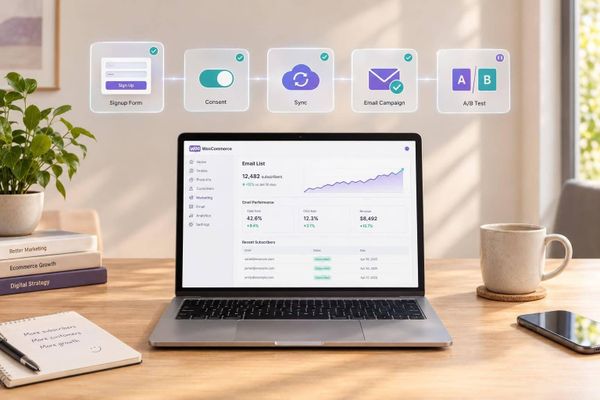
Audit WooCommerce signup flows, fix consent/sync/deliverability, and test offers to grow revenue per visitor.

Test data and fix failed checks first: verify identity, consent, app syncs, product feeds, journeys, and measurement before launch.

Compare lag and rolling-window features for weekly sales forecasts; backtest all configurations with cutoff-safe walk-forward tests.

Use Auth0 only when you need lasting customer accounts; separate login, wallet control, and server-checked NFT ownership.
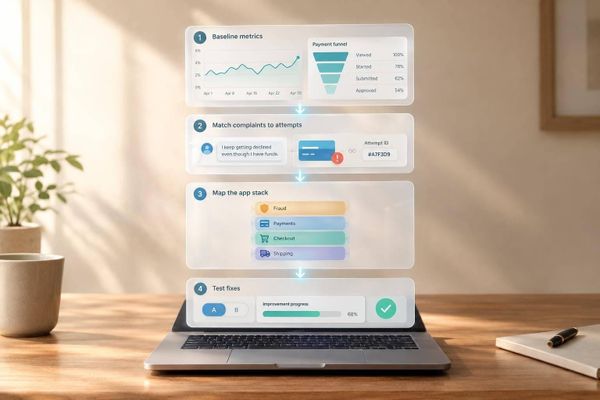
Audit Shopify payment declines to recover legitimate revenue: baseline metrics, match complaints to attempts, map app stack, and test fixes.

Short, signal-led Shopify cold emails beat generic pitches: use store signals, specific subjects, 50–100 words, and a 4-touch follow-up.

How repair stores use seven Shopify app categories to manage intake, scheduling, returns, warranties, subscriptions, support, and parts.

Qualify the Shopify store first—traffic, revenue, plan, and tech—then use LinkedIn to verify and rank the right decision-makers.

Benchmark Shopify checkout completion: median 38–48%, mobile ~44%, and how agencies should prioritize fixes.

Screen ecommerce stores with RPV — it reveals revenue per visitor; use AOV to identify merchandising and order-value levers.