
How Shopify Handles MySQL at Petabyte Scale
Shopify's MySQL scaling explained: pods, shards, Vitess, replicas, failover, rebalancing, and why agencies should measure before changing.


Score Shopify orders using device fingerprints plus IP, payment, and customer history; route risky orders to verification to reduce false positives.

Qualify e-commerce leads from storefront clues, score migration risk, and offer scoped discovery—confirm business needs before proposing technical work.

Social clicks fail when landing pages break the promise—fix offer match, mobile speed, buying flow, and trust signals to recover conversions.

Seven Shopify export limits—orders, customers, apps, themes, media, and history—and how to test restorability before pricing.

Hosted checkout cuts merchant security work; embedded checkout gives branding control but raises PCI, fraud, and maintenance duties.
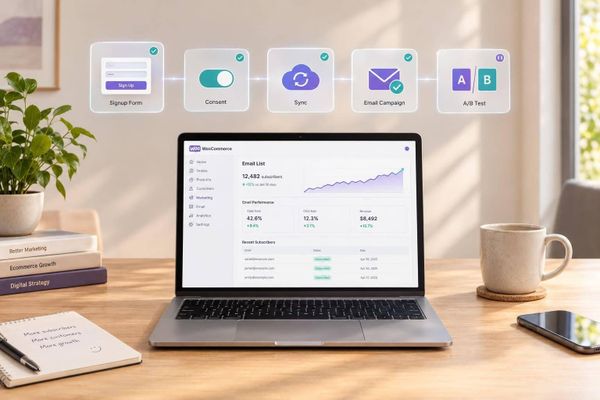
Audit WooCommerce signup flows, fix consent/sync/deliverability, and test offers to grow revenue per visitor.

Test data and fix failed checks first: verify identity, consent, app syncs, product feeds, journeys, and measurement before launch.

Compare lag and rolling-window features for weekly sales forecasts; backtest all configurations with cutoff-safe walk-forward tests.

Use Auth0 only when you need lasting customer accounts; separate login, wallet control, and server-checked NFT ownership.
Thoughts, stories and ideas.

Audit Shopify payment declines to recover legitimate revenue: baseline metrics, match complaints to attempts, map app stack, and test fixes.

Short, signal-led Shopify cold emails beat generic pitches: use store signals, specific subjects, 50–100 words, and a 4-touch follow-up.

How repair stores use seven Shopify app categories to manage intake, scheduling, returns, warranties, subscriptions, support, and parts.

Qualify the Shopify store first—traffic, revenue, plan, and tech—then use LinkedIn to verify and rank the right decision-makers.

Benchmark Shopify checkout completion: median 38–48%, mobile ~44%, and how agencies should prioritize fixes.

Screen ecommerce stores with RPV — it reveals revenue per visitor; use AOV to identify merchandising and order-value levers.

Compare Magento and Salesforce Commerce Cloud store benchmarks to target accounts by revenue, geography, stack depth, and recent change.

Build layered fourth-party risk visibility with vendor records, attack-surface checks, breach alerts, dependency mapping, and trust-center monitoring.

Route leads using verified store data—platform, revenue, country, stack; dedupe domains, flag weak data, and measure routing by meetings and SLA.

Learn a 3-step Shopify store plan that covers product research, store setup, SEO, ads, email, and scaling from $0 to $1M a year.

Learn 7 steps to build an ecommerce store with products, collections, cart, checkout, inventory, shipping, taxes, and payments.

SiteGround's AI Store Agent lets eCommerce merchants access insights and perform store tasks via chat-powered automation.