How Shopify Stores Use UGC to Build Trust
UGC placed at shopper hesitation points turns traffic into buyers—visual reviews, ratings, and review placement boost Shopify conversions.

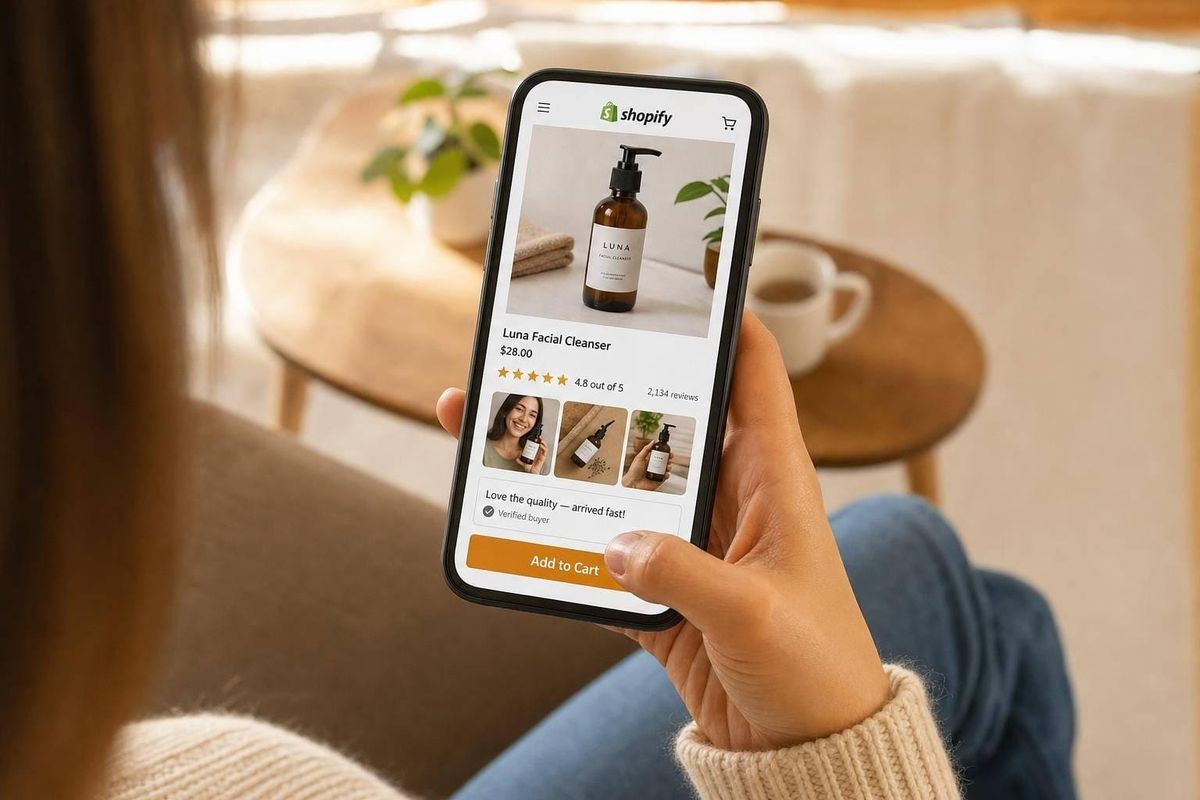
UGC helps Shopify stores turn doubt into sales. When shoppers see customer reviews, photos, videos, and Q&A near the buying point, they feel more sure about what they’re getting.
Here’s the short version:
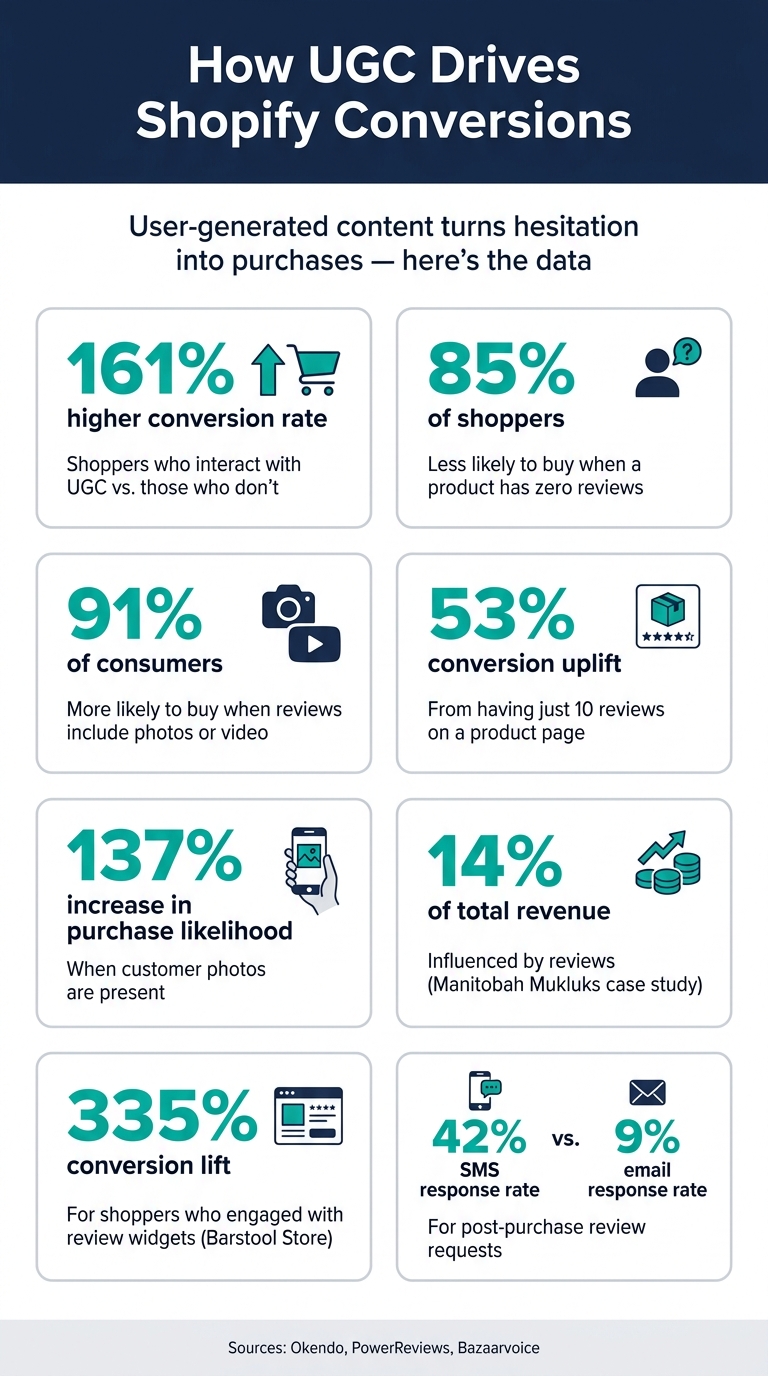
- Shoppers who interact with UGC can convert at a 161% higher rate
- 85% of shoppers are less likely to buy when a product has zero reviews
- 91% are more likely to buy when reviews include photos or video
- Even 10 reviews on a product page can lift conversion by 53%
If I were reviewing a Shopify store, I’d check four things first:
- Are star ratings visible on collection pages?
- Are reviews placed near price and Add to Cart?
- Do reviews include customer photos or video?
- Are reviews recent and detailed, not just a small batch of old comments?
The article’s main point is simple: UGC works best when it shows up where shoppers hesitate. On product pages, that often means near the title, image gallery, variant picker, and Add to Cart button. On collection pages, it means showing ratings early so people can compare items fast. At checkout, a short quote or review can help settle last-minute doubt.
The examples make that clear. Manitobah Mukluks used deep review coverage to help with sizing questions and saw 14% of revenue influenced by reviews. Barstool Store used review widgets for new drops and saw a 335% conversion lift among shoppers who used the widget.
I also see a clear rollout path for agencies:
- Audit trust gaps on the storefront
- Add the right UGC format for the problem
- Ask for reviews after delivery
- Put UGC in high-impact spots
- Track conversion, add-to-cart rate, and UGC engagement
For lead generation, the article shows how agencies can use StoreCensus to find stores with weak review setups, missing ratings, no customer media, or broken widgets after a theme change. That makes outreach more direct because you can point to a clear issue on the site instead of sending a vague pitch.
Bottom line: if a Shopify store has traffic but weak conversion, I’d check UGC before anything else. In many cases, the problem isn’t getting people to visit. It’s giving them enough proof to buy.
How UGC Boosts Shopify Store Conversions: Key Stats
Shopify Master Class I UGC & Reviews with Okendo
sbb-itb-61169e3
Where leading Shopify stores place UGC to build trust
Once you know where shoppers pause, put UGC right at those moments. The best Shopify stores do this where purchase decisions are made.
Reviews, photo galleries, and video UGC on product pages
The product page does most of the heavy lifting. Put star ratings and review counts close to the product title so shoppers see them right away. Add customer photos in or next to the image gallery to show fit, scale, and real-life color. If movement, texture, or assembly plays a role, add video to the gallery too.
Near the variant selector and Add to Cart button, a short review summary or top customer quote can help calm last-second doubt. Right when someone is deciding, that small bit of proof can make a big difference. Farther down the page, add filtered reviews and Q&A to handle deeper concerns.
84% of shoppers specifically want to see visual content from existing customers on product pages, and even 10 reviews on a product page can drive a 53% uplift in conversion.
Social proof on collection pages, homepages, and checkout
A lot of stores stop at the product page. Smart ones don’t.
Use star ratings on collection cards so shoppers can compare items at a glance. Add shoppable galleries on the homepage to bring in customer photos that feel more lived-in than polished brand shots. Near checkout, a short trust badge or testimonial can ease that final bit of doubt before payment.
Shopify app patterns behind these UGC setups
Most stores use two kinds of apps:
- Review apps for ratings and photo reviews
- Gallery apps for shoppable social feeds
The tool matters less than the workflow. Send review requests 10 to 21 days after delivery, then give customers a reason to submit photos or videos too.
Ratings give fast proof. Photos help shoppers judge fit. Video shows how the product works in real life. Reviews handle objections. Checkout badges help settle nerves at the last step.
These placements show up clearly in the store examples below.
Case studies: Shopify stores using UGC to close trust gaps
Manitobah Mukluks and Barstool Store
Some of the best examples come from brands selling products people need to trust before they can get their hands on them.
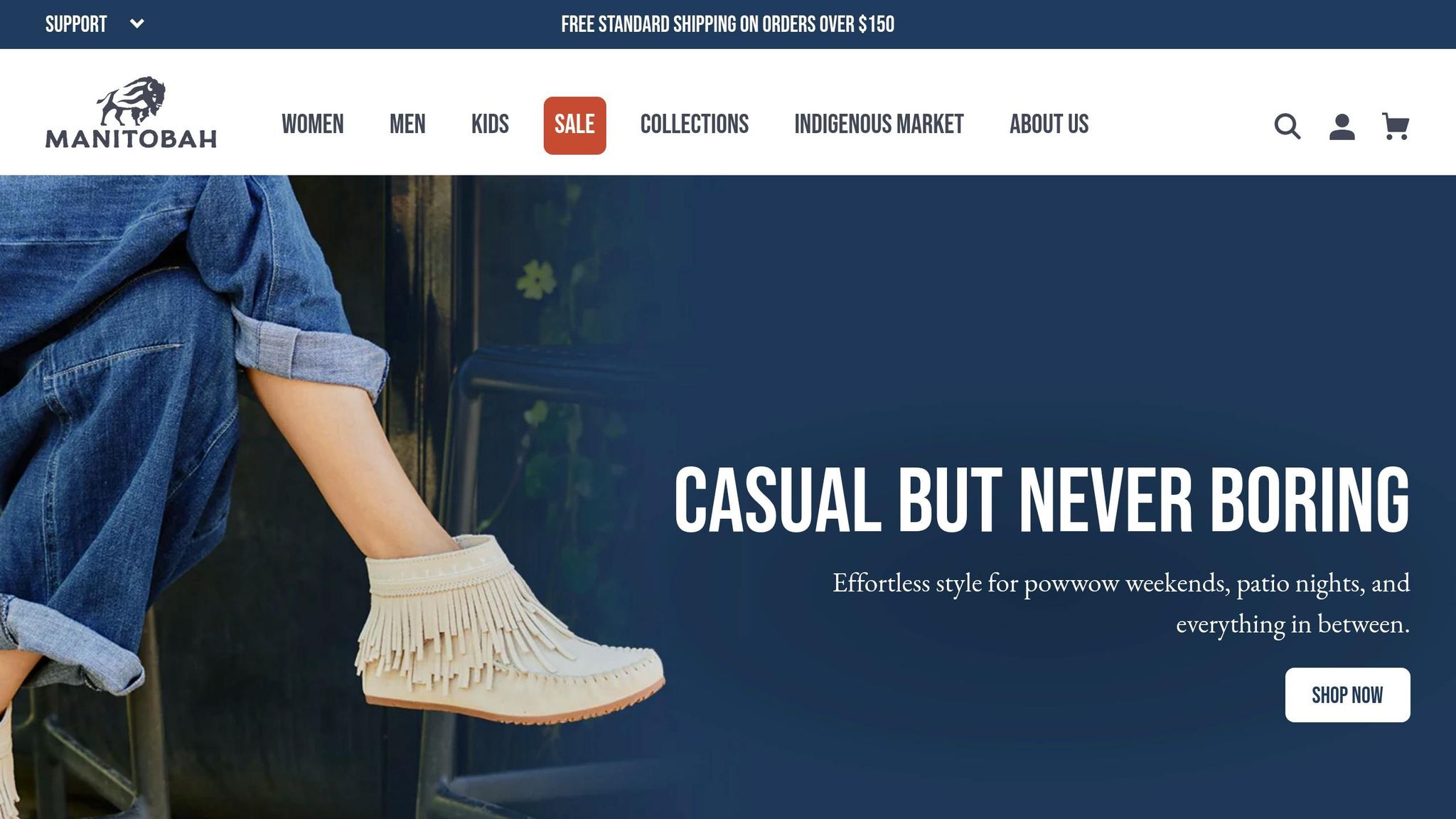
Manitobah Mukluks sells footwear. That puts the brand in a tough spot: shoppers can't try anything on before buying. To deal with that uncertainty, the company built deep review coverage with Okendo Reviews and reached 3,000 to 5,000 reviews per product. Those reviews did more than add social proof. They answered sizing and quality questions in a way brand copy often can't. In Okendo's customer story, 14% of Manitobah Mukluks' total revenue was directly influenced by reviews.
Barstool Store used review widgets to back new product launches and help prove new drops with its fan base. The result was hard to miss: review engagement lifted conversion 335% among shoppers who used the widget.
Patterns agencies can apply across categories
Both stores point to the same rule for agencies using Shopify brand prospect lists: put UGC where hesitation begins, not at the very end.
That sounds simple, but it's a big shift. If a shopper is stuck on sizing, show reviews that talk about fit. If they're unsure about product quality, surface detailed buyer feedback. If it's a brand-new drop, use reviews to show that other people bought in and liked what they got.
The key idea here is that review depth matters more than a perfect star rating. Shoppers usually aren't hunting for polished praise. They want useful detail from people who seem like them.
You can see the pattern across both brands: UGC cuts uncertainty right at the moment a person is deciding whether to buy.
| Store | Category | Trust Challenge | UGC Tactic | Reported Outcome |
|---|---|---|---|---|
| Manitobah Mukluks | Footwear | Sizing hesitation | 3,000–5,000 reviews per product via Okendo | 14% of revenue influenced by reviews |
| Barstool Store | Merchandise | New launch credibility | Review widgets via Okendo | 335% conversion lift for widget users |
Those same patterns show up in the rollout steps next, where agencies turn trust fixes into changes they can track.
How agencies can roll out and measure UGC improvements
A step-by-step UGC rollout for Shopify client stores
Start by finding where shoppers stall using Shopify store guides. High bounce rates and low add-to-cart rates often point to trust gaps. Use that audit to spot the main issue, then pick the first UGC format based on that gap.
Once you know where people hesitate, choose the tool that matches the store’s size and the kind of trust problem you need to fix. Keep the choice simple: are you trying to add visual proof, social proof, or more reviews to close a clear gap?
| Tool | Best-Fit Store | Key Capabilities |
|---|---|---|
| Loox | Small to mid-market, visual-heavy brands | Automated photo/video capture, fast widgets |
| Yotpo | High-volume, enterprise | AI summaries, SMS requests, retail syndication |
| Foursixty | Social-first, trend-driven brands | Shoppable Instagram/TikTok galleries, rights management |
| Judge.me | Budget-conscious, new stores | Unlimited review requests, basic photo support |
After the app goes live, look at whether UGC changes buying behavior, not just how many reviews come in.
Use the same placement order across the store: put the rating near the title, show customer media in the gallery, and place proof close to Add to Cart.
Post-purchase timing matters more than many agencies think. For apparel or everyday products, send the review request 7–14 days after delivery. For skincare or wellness items that need more time, wait 21–28 days. SMS works much better than email here: SMS review requests see a 42% response rate versus 9% for email.
What to measure after UGC goes live
The main thing to watch is whether shoppers who interact with UGC buy more. Shoppers who engage with UGC reviews convert 144% more often and generate 162% higher revenue per visitor. That’s the metric clients care about.
Focus first on conversion rate and add-to-cart rate. Then look at UGC-specific signals, such as:
- The share of visitors who click or expand photo reviews
- The review submission rate from post-purchase requests
- Revenue tied to UGC engagement
If your platform allows it, compare users who interacted with UGC with users who didn’t. That gap gives you the clearest read on impact.
Run A/B tests early. Text-only reviews and photo-first reviews can perform very differently depending on the product category. Test text-only vs. photo-first layouts, and test most helpful sorting vs. chronological sorting. Also, don’t chase a perfect 5.0 rating. A 4.6 average with detailed reviews tends to feel more believable than a score that looks a little too clean.
Finding Shopify stores with weak UGC using StoreCensus
Signs that a store has a trust problem, not just a traffic problem
A store that’s struggling often has a trust issue, not just a traffic issue. Stores converting below 1%–2% often don’t have the social proof that helps turn casual browsers into buyers.
| Observable Signal | Likely Trust Problem | Service | Remediation Workflow |
|---|---|---|---|
| No review widget or <20 reviews | Cold-start hesitation; shoppers need more reassurance | CRO / Retention | Automated post-purchase email and SMS review flows with incentives |
| Studio-only photos, no customer media | Visualization gap; shoppers can't imagine the product in real life | Creative & Content Strategy | Launch a branded hashtag campaign; use review apps to request photo and video reviews |
| Missing ratings on collection pages | Friction in discovery; shoppers can't gauge popularity | Shopify Development | Integrate star ratings into product cards and collection filters |
| Reviews buried in tabs or below the fold | Social proof is easy to miss during evaluation | UX / Shopify Development | Move star ratings near the title; embed UGC galleries above the fold |
| Static Instagram feed with no path to purchase | Fragmented path from inspiration to purchase | Social Commerce | Replace it with a shoppable gallery |
You can spot the pattern pretty fast. If reviews are hard to find, if product pages show polished brand shots but no customer proof, or if ratings never appear until the shopper is deep in the page, trust starts to leak.
Once you can see that gap, the next move is to find more stores with the same setup at scale.
Using StoreCensus to build UGC-focused lead lists
That’s where a manual review turns into a focused lead list. StoreCensus lets agencies filter across 6M+ Shopify and WooCommerce stores by revenue band, tech stack, theme, country, and growth signals. So instead of hunting one store at a time, you can zero in on merchants that are more likely to need your help.
A good place to start is stores in the $1M–$10M revenue range with low review volume, no customer media, or dated storefront layouts. From there, you can narrow the list further.
For example, you can look for:
- Stores that recently changed themes, which can break UGC widgets
- Stores in visual categories like apparel or beauty
- Stores showing growth signals but still using basic review setups
That gives you a list of prospects with a visible problem you can diagnose fast and fix with a clear workflow.
And that changes the pitch. Instead of sending vague outreach, you can point to the exact UGC gap on the site and tie it to missed revenue.
Conclusion: What the case studies show about UGC and trust
The case studies point to the same thing again and again: UGC works best when shoppers see it at the moment they’re deciding, not after. Visual proof beats polished copy. Customer photos increase purchase likelihood by 137%, and 91% of consumers are more likely to buy when reviews include photos or video alongside text.
For agencies, weak UGC isn’t just a design flaw. It’s a revenue leak you can see, explain, and fix. StoreCensus helps you find those stores at scale, then turn that insight into sharper outreach.
FAQs
What kind of UGC helps Shopify stores most?
Customer photos and videos are the most effective type of UGC because they show what brand copy can't: proof from actual buyers.
Photo reviews tend to work best for apparel and home goods. Video reviews have more impact for complex or high-ticket products, where people want a closer look before they buy. Star ratings and written reviews still help build trust at a basic level, but visual proof does more to ease purchase anxiety.
How many reviews does a product need to build trust?
There’s no magic number here, but review count matters a lot.
About 47% of consumers won’t buy from a business with fewer than 20 reviews. And products with fewer than 3 reviews convert 20% worse than products with 30 or more reviews.
Even a single review can lift purchases by 10%. Still, a bigger review count tends to build more trust. “4.7 stars from 847 reviews” feels a lot more convincing than a star rating by itself.
How can agencies find Shopify stores with weak UGC?
Agencies can spot Shopify stores with weak user-generated content by checking product pages for gaps in social proof. A simple way to start is with StoreCensus. You can filter stores by tech stack and growth signals, then do a manual site audit.
The biggest red flags are usually easy to see. For example:
- Only studio photography
- No recent or verified reviews
- No customer photos or videos
- No Q&A section
- No examples of people using the product in everyday life
If a store looks polished but feels a little too staged, that's often the issue. The product page may look nice, but it doesn't give shoppers enough proof from actual buyers.