Why Your Competitor's Uninstalls Are Your Best Leads
Every competitor uninstall is a qualified lead: they have the problem, have budget, tried a solution that failed, and are back in the market NOW. Cold outreach converts at 1-3%. Competitor uninstalls convert at 15-25%. 2-hour setup. Compounds monthly. Your competitors are building this today.


Look, I'm going to show you something that 99% of Shopify app developers completely miss.
Every month, thousands of merchants uninstall your competitor's apps. These aren't random stores browsing the app store. These are qualified buyers who:
- Already identified the problem you solve
- Already allocated budget for a solution
- Already tried the "safe choice" and watched it fail
- Are actively back in the market RIGHT NOW
And most developers never see this signal. They're spending 40 hours a week on cold outreach that converts at 1-3%, while the highest-intent leads in their category are slipping through their fingers.
Here's what I'm going to cover:
- Why uninstalls convert 2-3x better than any other lead source
- The actual numbers (because data matters)
- How to set this up in 2 hours
- Why this compounds every single month
Let's get into it.
The Math That Changes Everything
Cold outreach to random Shopify stores: 1,000 emails → 20 responses → 2 customers. That's 40 hours of work for a 0.2% conversion rate.
Competitor uninstall monitoring: 1,000 qualified leads → 150-250 responses → 15-25 customers. Same time investment. 10x better results.
But here's where it gets interesting. Those aren't just better conversion rates. They're better quality leads.
What a cold lead tells you:
- Maybe they have your problem
- Maybe they have budget
- Maybe they're evaluating solutions
- Maybe they have authority to buy
What a competitor uninstall tells you:
- They definitely have your problem (just paid for a solution)
- They definitely have budget (were paying for apps)
- They're definitely evaluating (the solution failed them)
- They definitely have authority (made the uninstall decision)
- They know exactly what they don't want
See the difference? You're not guessing. You're not hoping. You're reaching out to merchants who are actively frustrated and looking for something better.
Why Uninstalls Beat Installs (And Everything Else)
Here's something counterintuitive: When someone installs your competitor's app, that's a decent signal. When they uninstall it? That's gold.
Think about the psychology for a second.
Someone who just installed a competitor:
- Made a choice, committed to it
- Optimistic about their decision
- Experiencing recency bias and sunk cost
- Not actively looking for alternatives
Someone who just uninstalled a competitor:
- The solution failed them over weeks or months
- Actively dissatisfied right now
- Back in the market immediately
- Know their specific pain points
- Desperate for something that actually works
The data backs this up:
| How Long They Used It | Conversion Rate | Why |
|---|---|---|
| Uninstalled after 1 week | 12-18% | Quick dissatisfaction |
| Uninstalled after 1 month | 18-25% | Gave it a fair shot |
| Uninstalled after 3+ months | 25-35% | Serious evaluation, major pain |
A merchant who used your competitor for 6 months before uninstalling isn't experimenting. They tried the market leader, gave it a real shot, and watched it fail. They're bleeding.
That's your opportunity.
The Real Numbers Behind This Channel
Let's talk specifics. Say you're building a reviews app.
Here's what's happening in your category every month (rough estimates, your category may vary):
- 10,000-20,000 installs across top 10 review apps
- 5,000-10,000 uninstalls across those same apps
- You can identify ~80% of those stores
- ~60% have accessible contact info
Even at the low end, that's thousands of qualified leads per month in just one category.
If you capture just 1% of the identifiable leads and convert at 15%, you're looking at 7-15 new customers per month from one automation.
Compare that to any other channel:
| Channel | Time Investment | Customers/Month | Time per Customer |
|---|---|---|---|
| Competitor monitoring | 2 hours setup, 2 hours/month maintenance | 15-60 | 20-40 minutes |
| Cold outreach | 40 hours/month | 5-15 | 2.5-8 hours |
| Content marketing | 40+ hours/month | 10-30 | 1.5-4 hours |
| Paid ads | 20+ hours/month + ad spend | 20-40 | 30-60 minutes + cost |
The ROI isn't even close.
Why This Compounds (The Part Nobody Talks About)
Paid ads stop when you stop paying. Content marketing plateaus. Cold outreach requires constant manual effort.
Competitor monitoring gets better every single month.
Here's what actually happens:
Month 1:
- Monitor 5 competitors
- Get ~200 leads
- Test messaging, learn what works
- Convert 8-12 customers
- System pays for itself
Month 3:
- Refined messaging based on real data
- Monitoring 8 competitors now
- Getting ~250 leads/month
- Converting 15-20 customers
- Channel covers your salary
Month 6:
- Monitoring 12 competitors + adjacent apps
- Built playbooks for each competitor type
- Getting ~400 leads/month
- Converting 30-40 customers
- Primary growth driver
Month 12:
- Monitoring 15+ competitors
- Predictable 600+ leads monthly
- Converting 60-80 customers
- Driving 40-50% of total growth
The system improves while you sleep because:
- More competitors monitored → more leads
- More data collected → better targeting
- Better messaging → higher conversion
- More revenue → monitor even more competitors
- Cycle repeats and accelerates
After 12 months, you have a competitive moat that's nearly impossible to replicate. You own the knowledge of what works for each competitor's users. You have relationships with stores who aren't ready yet but will be. You have a machine that prints qualified leads.
Your competitor who starts this today will have that 12-month advantage. That gap is brutal to close.
The Strategic Framework: Not All Competitors Are Equal
Don't just blast everyone. Build a tier system.
Tier 1: Direct competitors, similar size
- Stores comparing you directly
- Uninstalls = very high value (they chose wrong, need to correct)
- Action: Personalized outreach within 24 hours
Tier 2: Direct competitors, much larger
- The "safe choice" that often disappoints
- Uninstalls = very high value (safe choice failed, they're open)
- Action: Position as the specialized alternative
Tier 3: Adjacent solutions
- Apps solving related problems
- Uninstalls = medium value (might need your solution next)
- Action: Educate on problem overlap
Example: If you're a reviews app, here's what different uninstalls mean:
| App Type | What Their Uninstall Signals |
|---|---|
| Direct reviews competitor | Solution failed → high intent, ready to switch |
| UGC/visual marketing app | Visual approach didn't work → might need reviews |
| Loyalty/rewards app | Rewards underperformed → need social proof instead |
| Email marketing app | Email struggling → need more proof elements |
This isn't about volume. It's about building a psychological map of your category.
The 2-Hour Setup (Seriously)
Here's the actual time investment:
Week 1: Initial Setup
- 30 min: Identify your top 5 competitors
- 45 min: Set up StoreCensus + Zapier automation
- 30 min: Customize email template
- 15 min: Test the flow
- Total: 2 hours
Ongoing: Maintenance
- 1 hour/month: Add new competitors
- 1 hour/month: Review and optimize
- Total: 2 hours/month
That's it. 4 hours to build, 2 hours monthly to maintain. For a channel that generates 15-80+ customers per month.
How Zapier Makes This Work With Your Existing Stack
Here's the thing: StoreCensus sends you webhooks when competitors get installed/uninstalled. Zapier turns those webhooks into actions in the tools you already use.
You're not learning a new platform. You're plugging this into your existing workflow.
The basic flow:
- StoreCensus detects competitor uninstall
- Sends webhook to Zapier
- Zapier routes the lead wherever you want
Where you can send leads:
Email directly from Gmail:
- Most popular option for small teams
- Sends from your actual email address
- Feels personal, not automated
- Works great for 20-100 leads/month
Cold email tools (Lemlist, Instantly, Reply.io, Mailshake):
- Better for higher volume
- Built-in follow-up sequences
- Email warmup and deliverability features
- Works great for 100+ leads/month
Google Sheets (for logging and review):
- Track every lead that comes through
- Review before sending (if you want manual control)
- Build historical database of competitor activity
- Reference later for analysis
Your CRM (HubSpot, Pipedrive, Salesforce, etc):
- Automatically create contacts
- Tag as "Competitor Uninstall - High Intent"
- Trigger your existing sales workflows
- Track conversion rates properly
Slack notifications:
- Get pinged when high-value leads come through
- Good for team coordination
- Lets you jump on hot leads fast
The beauty of this: You can do all of the above simultaneously.
Common workflow for solopreneurs:
Webhook → Log to Google Sheets → Send Gmail
Common workflow for small teams:
Webhook → Add to CRM → Send via Lemlist → Notify in Slack
Common workflow for larger teams:
Webhook → Filter by value → High-value to CRM + Slack → Standard to email sequence
You set this up once. It runs forever. The leads just flow into whatever tools you're already using.
What You Actually Receive (It's Not Just Emails)
Most lead gen tools give you an email and say "good luck."
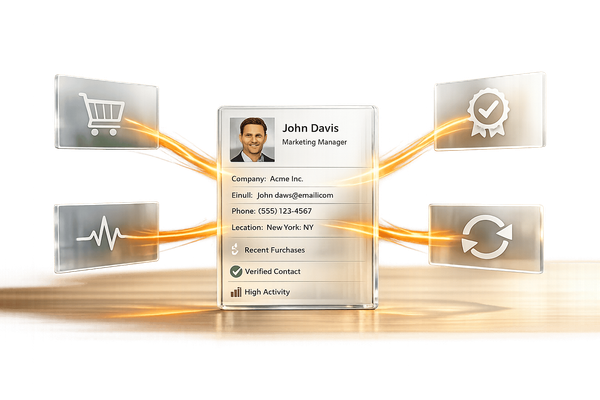
StoreCensus gives you intelligence. Every webhook includes:
Event data:
- Which competitor app (tailor your messaging)
- How long they used it before uninstalling (gauge commitment)
- Exact timestamp (time your outreach)
Store data:
- Store URL (research before reaching out)
- Industry vertical (personalize value prop)
- Country/language (be culturally relevant)
- Store age (match sophistication level)
- Traffic estimates (prioritize leads)
Contact data:
- Multiple emails with types (founder vs support)
- Social profiles (multi-channel outreach)
- Preferred contact method
This enables you to send emails that actually convert.
Example of what you get:
A beauty store in Singapore uninstalls your competitor's reviews app after 253 days. You receive:
- Store: niid.sg
- Vertical: Sports & Outdoors
- Country: Singapore
- Emails: agent@niid.com (founder), support@niid.com (support)
- Social: Instagram, Facebook, YouTube
- Days installed: 253 days
- Language: English
Now you can write:
"Hey, noticed you gave [Competitor] an 8-month run before removing it. Most stores in outdoor gear tell us the issue is video reviews—visual proof matters so much in this category.
We built [Your App] specifically for brands frustrated with that limitation. [Similar Brand] switched after 6 months and now gets 3x more video reviews.
Worth a quick look?"
That's the power of having real intelligence, not just an email address.
The Three Email Types That Actually Convert
After looking at thousands of competitor outreach campaigns, three types consistently win:
1. The Empathy Open (Best for uninstalls)
Subject: "[Competitor] didn't work out?"
Why this works: You're validating their frustration instead of selling. They uninstalled because something failed. You're saying "I understand exactly why." That builds instant trust.
Structure:
- Acknowledge their experience
- List the top 3 pain points people report about that competitor
- Explain how your solution addresses those specifically
- Low-commitment next step
Conversion rate: 18-25% for stores that used competitor 30+ days
Template:
Subject: [Competitor] didn't work out?

Hi [Name],

Noticed you recently removed [Competitor]—totally get it, we hear that a lot.

The most common issues people mention:
- [Pain point 1]
- [Pain point 2]
- [Pain point 3]

We built [Your App] specifically to solve those problems. The main difference is [key differentiator].

Want to see how it works? I can do a quick 10-minute walkthrough—no commitment, just show you the approach.

[Calendar link]

[Your name]
2. The Migration Offer (Best for recent uninstalls)
Subject: "Free migration from [Competitor]"
Why this works: The biggest barrier isn't your product—it's losing their setup and starting over. Remove that friction and the decision becomes trivial.
Structure:
- Acknowledge they just uninstalled
- Offer to migrate everything in 24 hours
- List exactly what transfers
- Make it completely frictionless
Conversion rate: 15-20% for stores that used competitor 7-30 days
Template:
Subject: Free migration from [Competitor]

Hi [Name],

Saw you removed [Competitor]. If you had data/settings configured there, I know starting over is painful.

We'll migrate everything for you—free, done in 24 hours.

What we transfer:
- All your existing reviews
- Settings and configurations
- Custom styling

You don't lose any work, and you can evaluate us with your actual data instead of starting from scratch.

Want us to handle it?

[Your name]
3. The Pattern Recognition (Best for power users)
Subject: "Saw you removed [Competitor] after [X] months"
Why this works: Shows you're paying attention and understand their journey. The longer they used it, the more this resonates.
Structure:
- Reference how long they used it
- Show you understand what that means
- Offer specific solution to their likely pain
Conversion rate: 20-30% for stores that used competitor 90+ days
Template:
Subject: Saw you removed [Competitor] after 8 months

Hi [Name],

Eight months is a serious evaluation. You clearly gave [Competitor] a fair shot.

Most [vertical] stores who leave after that long mention [specific pain point that emerges over time]. The issue usually isn't obvious at first, but becomes clear after a few months of real usage.

We built [Your App] specifically because we kept hearing this same story. [Customer in same vertical] switched after 6 months with [Competitor] for exactly this reason.

Worth a conversation? I can show you how we solved it.

[Your name]
The pattern across all three: Specificity, empathy, and low-friction next steps. You're not selling. You're helping them solve a problem they demonstrably have.
What This Actually Looks Like at Scale
Let me show you what happens when you run this for real.
Month 1-2: Learning Phase
- You're testing messaging
- Figuring out which competitors convert best
- Learning which verticals respond
- Converting 8-15 customers/month
Month 3-6: Optimization Phase
- You know what messages work for each competitor
- You've identified your best verticals
- Your templates are refined based on real responses
- Converting 20-35 customers/month
Month 7-12: Scale Phase
- You're monitoring 15+ competitors
- Your playbooks are dialed in
- You're getting 500-800 leads/month
- Converting 50-80 customers/month
- This is now your primary growth channel
The compounding effect is real:
Your competitor who starts today will have 12 months of:
- Messaging data you don't have
- Relationships with stores who aren't ready yet
- Understanding of seasonal patterns in your category
- Optimized playbooks for each competitor type
That gap is nearly impossible to close in a competitive market.
The Real Cost of Not Doing This
Every day without competitor monitoring, you're missing:
Daily:
- 30-150 competitor installs you don't see
- 15-75 competitor uninstalls you miss
- 5-20 qualified leads going to other alternatives
Monthly:
- 1,000-4,500 missed install signals
- 500-2,250 missed uninstall signals
- 150-750 qualified leads to competitors
Annually:
- 12,000-54,000 missed install signals
- 6,000-27,000 missed uninstall signals
- 500-1,500 customers that could have been yours
- $300K-$1.5M+ in potential revenue
But the real cost isn't the immediate revenue. It's the compounding you miss.
Your competitor who starts today:
- Month 1: 12 customers from automation
- Month 12: 60+ customers from automation
- Year 2: 150+ customers from automation
- Compounds indefinitely
You, starting 12 months later:
- Month 1: 12 customers from automation
- Month 12: 60+ customers from automation
- Playing catch-up forever
In categories where winner-takes-most, being 12 months behind is often insurmountable.
The Competitive Moat You're Actually Building
Here's what nobody talks about.
After 6-12 months of running this, you're not just generating leads. You're building a strategic asset.
You develop proprietary knowledge:
- Which pain points resonate for each competitor's users
- Which verticals convert best from which competitors
- Which objections come up most frequently
- What incentives actually drive decisions
- Seasonal patterns in your category
You build relationships:
- Stores who aren't ready now but will be in 3 months
- Merchants who remember you reached out first
- Networks of similar stores in the same vertical
You create a growth loop:
- More data → better conversion → more revenue
- More revenue → more monitoring → more data
- Better conversion → better reputation → easier outreach
- The system accelerates itself
This isn't just a lead channel. It's a moat that gets wider every month.
Your competitor can't replicate 12 months of data overnight. They can't fake the relationships you've built. They can't shortcut the learning you've accumulated.
Start Building This Today
Look, you have everything you need:
The strategy:
- Why uninstalls are the highest-intent leads available
- How to prioritize competitors
- Why this compounds every month
The implementation:
- 2-hour setup in StoreCensus + Zapier
- Route leads to your existing tools (Gmail, Sheets, CRM)
- Email templates with 15-25% conversion rates
The data:
- Store details, vertical, country, language
- Contact emails with types (founder vs support)
- Days installed (gauge commitment level)
The proof:
- 10x better conversion than cold outreach
- 15-60+ customers per month at scale
- Compounds instead of plateaus
The only question is whether you'll actually do it.
Your 7-day action plan:
Day 1: List your top 5 direct competitors
Day 2: Set up StoreCensus automation for uninstalls
Day 3: Build Zapier workflow (pick one: Gmail, Sheets, or CRM)
Day 4: Customize one uninstall email template
Day 5: Test by sending 5-10 emails manually
Day 6: Activate full automation
Day 7: Add install monitoring with separate template
By Day 8, you have a machine generating qualified leads 24/7.
By Month 3, this system is producing 15-25 customers monthly.
By Month 12, it's your primary growth engine and a strategic moat.
The developers who build this in December 2025 will dominate their categories in 2026.
The ones who wait will spend years trying to catch up—watching competitors with better data, better messaging, and better relationships own the channel.
Your competitor monitoring system is waiting to be built.
The question is: will you build it, or will you let your competitor build it first?
Ready to capture every competitor uninstall in your category? Start with StoreCensus →
Related reading: