Ultimate Guide to Sales Funnel Automation
Automate your sales funnel to save time, qualify and nurture leads, recover abandoned carts, and improve conversion metrics.


Sales funnel automation helps businesses save time, scale operations, and increase revenue by automating repetitive processes like follow-ups, lead qualification, and customer engagement. Companies using automation report higher conversion rates, larger deal sizes, and faster response times. It simplifies lead nurturing, reconnects with potential buyers, and personalizes customer experiences without manual effort.
Key Benefits of Sales Funnel Automation:
- Time Savings: Automates tasks like email follow-ups and data entry.
- Higher Revenue: Structured funnels deliver 18x revenue growth and 102% larger deals.
- Improved Lead Management: AI and automation boost lead generation by 50% and reduce costs by 40-60%.
- Personalization at Scale: Tailored messages based on customer behavior.
- Ecommerce Growth: Handles peak shopping seasons effortlessly, recovers lost revenue, and enhances customer retention.
Core Stages of an Automated Funnel:
- Awareness: Attract visitors through ads, SEO, or social media.
- Consideration: Engage leads with content like demos or product comparisons.
- Decision: Simplify purchases with clear CTAs and smooth checkout processes.
- Retention: Build loyalty with follow-ups, thank-you emails, and rewards.
Tools and Strategies:
- Use CRM systems, email marketing platforms, and analytics dashboards to centralize data and automate workflows.
- Implement lead scoring, cart abandonment sequences, and personalized recommendations to maximize conversions.
- Regularly track metrics like Customer Acquisition Cost (CAC), Lifetime Value (CLV), and conversion rates to refine your funnel.
Avoid Common Pitfalls:
- Don’t over-automate; maintain a personal touch.
- Ensure all tools integrate seamlessly to prevent data gaps.
- Test and adjust workflows continuously to improve results.
Start small - automate basic tasks like lead capture and follow-ups. Gradually expand as you measure success and identify new opportunities for automation.
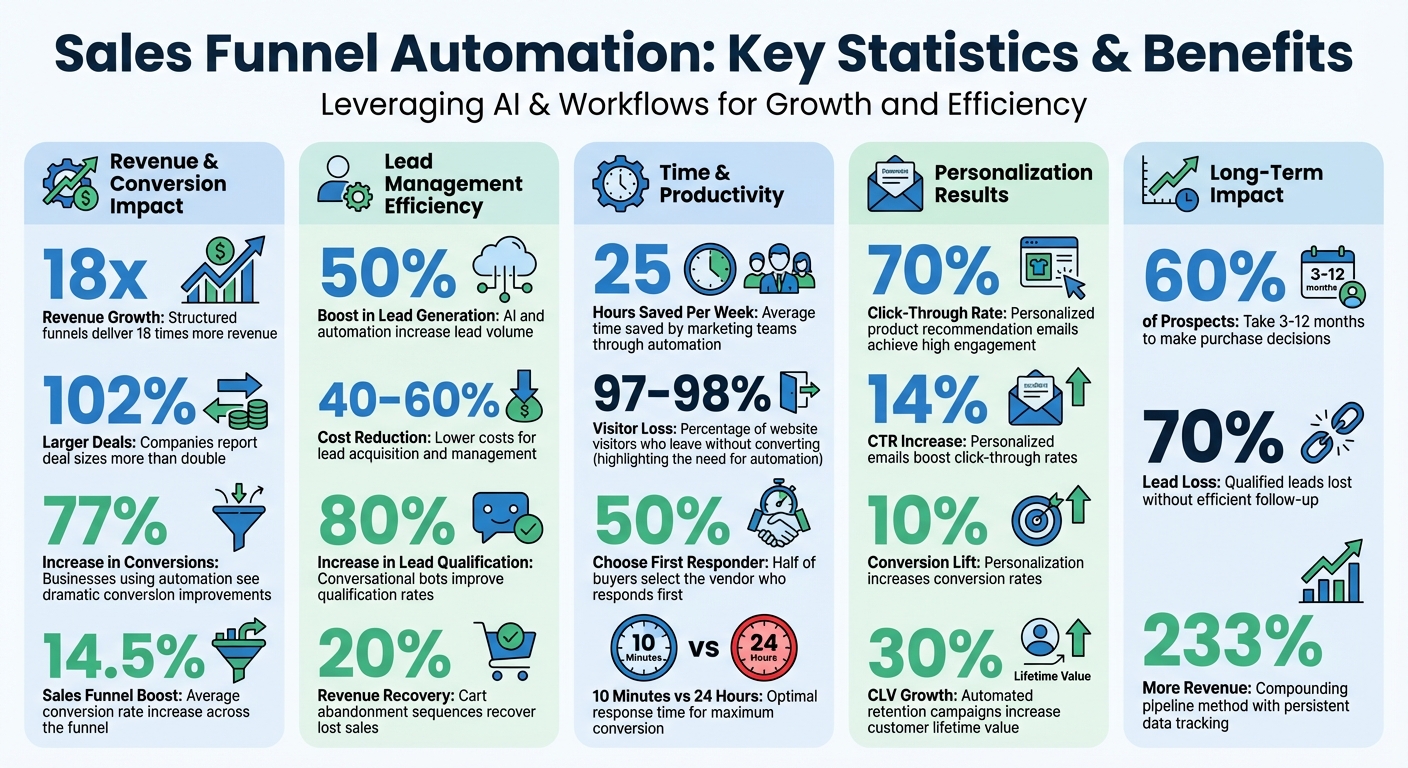
Sales Funnel Automation Statistics and Benefits
FREE Course: Building an Automated Funnel from Scratch (A-Z Guide)
Core Components of an Automated Sales Funnel
Let’s dive into the essential building blocks of an automated sales funnel. These funnels are designed to guide potential customers from their initial interest all the way to making a purchase. The process is divided into three key stages: attracting visitors, building trust, and closing sales. Each stage requires specific automation strategies because what grabs attention may not necessarily seal the deal.
The real strength of automation lies in simplifying and optimizing every step of this journey. For example, your system can automatically capture leads through a landing page, feed them into a CRM, analyze their behavior, and trigger personalized responses. This is especially important when you consider that 97% to 98% of website visitors leave without sharing their details or making a purchase. By automating these interactions, you can engage and convert prospects who might otherwise slip away. Here’s a closer look at how automation works at each stage.
Top-of-Funnel: Lead Generation
The first step is capturing contact information from potential customers. This is often done through opt-in forms, landing pages, lead magnets (like free guides or discount codes), and exit-intent pop-ups that appear when someone is about to leave your website. The goal is to offer something valuable in exchange for their email address.
Once the lead submits their details, automation takes over. Their information is instantly routed into your CRM, categorized by its source, and tagged for follow-up. This ensures timely and relevant communication without manual effort.
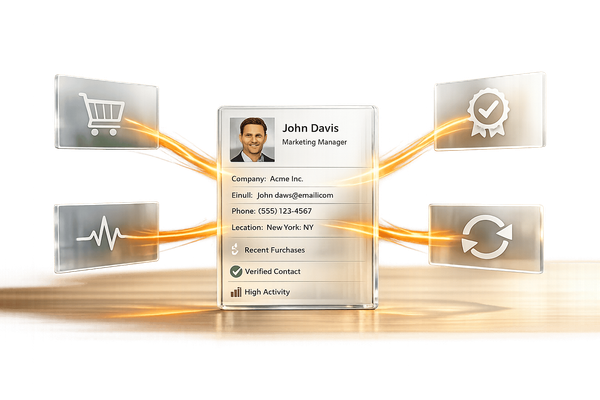
For businesses targeting specific audiences, tools like StoreCensus can go a step further by pulling in additional details - like company size, industry, or technology stack - without requiring manual research. This creates a more complete profile of your leads, setting the stage for smarter engagement down the line.
Middle-of-Funnel: Lead Nurturing
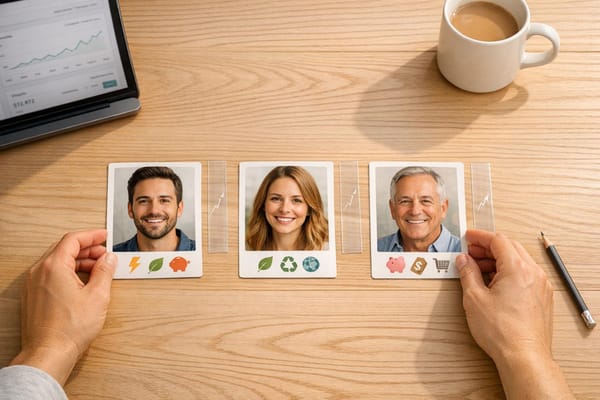
After capturing a lead, the focus shifts to building trust and keeping them engaged until they’re ready to buy. This is where automated emails and behavioral triggers shine. You can segment your leads based on their actions - such as the pages they visit or the content they download - and deliver tailored messages accordingly.
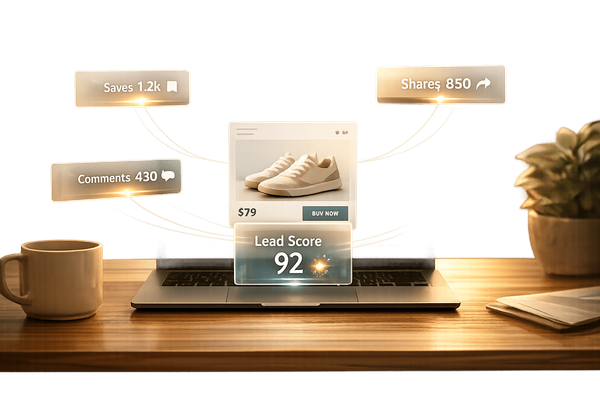
Lead scoring is a crucial part of this stage. Automation assigns scores based on behavior, helping you identify which leads are most engaged and ready to move forward. Conversational bots can also play a big role, with some companies reporting up to an 80% increase in lead qualification rates thanks to these tools.
Personalization is another game-changer. For instance, emails with personalized product recommendations can achieve click-through rates as high as 70%. With automation workflows that use conditional logic, you can ensure that each lead receives content that aligns with their interests - without the need to manually craft every message.
Bottom-of-Funnel: Converting Leads to Customers
At this stage, the goal is to turn nurtured leads into paying customers. Automation simplifies this by enabling features like one-click checkouts, guest checkout options, and automated invoicing. These tools make the purchasing process smoother, which can significantly boost conversion rates.
Techniques like order bumps and upsells are particularly effective here. An order bump might suggest a small add-on during checkout - like a phone case when someone buys a phone - while upsells recommend complementary or premium products immediately after the initial purchase. These strategies are triggered automatically based on the items in the cart.
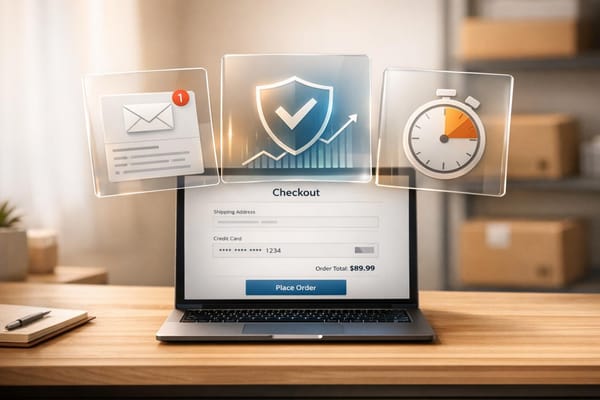
Cart abandonment sequences are another vital part of this stage. If a customer adds items to their cart but doesn’t complete the purchase, your system can automatically send a follow-up email. These emails often include incentives, like discounts or free shipping, to encourage the customer to return and complete their purchase. Businesses that implement these automated follow-ups have reported recovering up to 20% of lost revenue. Additionally, reducing response times - from 24 hours to just 10 minutes - can make a huge difference, as 50% of buyers tend to choose the first vendor to respond.
Setting Up Automation: Tools and Methods
Selecting Automation Tools
Choosing the right automation tools starts with understanding your business priorities. For example, if your success hinges on driving social traffic, focus on mobile-friendly designs to keep bounce rates low. On a tight budget? Look into all-in-one platforms that provide affordable or even free entry-level options.
Automation tools generally fall into categories like funnel builders, email marketing platforms, CRM systems, and analytics dashboards. It’s important to ensure these tools integrate seamlessly with your existing systems, such as payment processors and email platforms.
For ecommerce businesses, platforms like StoreCensus offer a way to enrich lead data automatically. By analyzing over 2.5 million stores, it provides actionable insights like platform usage, installed apps, and growth trends. This eliminates the need for manual research, updating your CRM with real-time data. For example, you can identify Shopify stores that recently made changes, such as installing a new app or tweaking their checkout process. StoreCensus connects via API and integrates directly with CRMs to keep your data accurate and up-to-date.
When evaluating tools, focus on their potential return on investment rather than just their price. For instance, a tool that increases your conversion rate from 2% to 3.6% could pay for itself in a single day. Interactive funnels, for example, have been shown to boost conversions by at least 80%. Also, double-check that the tools you choose integrate natively with your systems - unexpected custom coding or developer fees can quickly eat into your budget.
Once you’ve selected the right tools, you can start building automated workflows to maximize your sales funnel’s efficiency.
How to Integrate Automation Workflows
After selecting your tools, the next step is aligning them with your customer journey. Start by mapping out the entire process, from the first interaction to post-purchase engagement. This helps identify areas where automation can have the most impact, such as instant lead routing, email triggers based on behavior, or abandoned cart reminders.
A great example of this in action is the sports recording company Veo. Over an 18-month period ending in 2024, they automated their lead lifecycle by connecting Facebook and Instagram leads to ActiveCampaign and Pipedrive. This strategy reduced their cost-per-lead by 20%, increased their lead conversion rate to 7.5%, and ultimately doubled the company’s size.
"It's helped us accelerate our sales cycle… and saved us thousands of hours, and costs, because we didn't have to hire a developer to make multiple systems talk to each other."
– Lars Christensen, Social Ads Specialist, Veo
Start small by automating high-volume tasks like data entry and follow-ups. Use no-code tools to connect apps through simple triggers and actions, avoiding the need for complex infrastructure changes. On average, marketing teams save about 25 hours per week by automating these repetitive processes.
Centralizing your data in a CRM is critical for maintaining accuracy and giving your sales team the full context for every lead. Implement lead scoring based on key actions - such as visiting your pricing page or downloading a resource - so your team knows which prospects to prioritize. To fine-tune your automation, continually A/B test elements like subject lines, call-to-action buttons, and email timing, ensuring steady performance improvements without disrupting your workflow.
Common Mistakes to Avoid
Automation isn’t a “set it and forget it” solution. While it can streamline processes, it doesn’t replace the need for human interaction. A personal touch is often essential for closing deals. Problems can also arise when sales and marketing teams operate in silos - sales teams may miss leads or lack the data needed to act effectively.
Disconnected systems are another common issue. If your chat, email, and CRM platforms don’t talk to each other, you risk creating data gaps that lead to missed opportunities. Additionally, automating processes without first defining your buyer personas or conducting thorough research can result in automating inefficiencies rather than meaningful tasks. Over-automation can also backfire; sending too many messages or irrelevant content can drive up unsubscribe rates and damage your sender reputation.
To avoid these pitfalls, eliminate manual data entry by using AI tools to standardize information like company names and job titles. Monitor your deliverability metrics regularly - high bounce or spam rates could signal the need to clean your database or adjust your messaging strategy. And remember: 53% of consumers are willing to switch providers for better personalization. Generic, automated messages can push customers away.
Tracking and Improving Funnel Performance
Once you’ve established performance metrics, the next step is refining your funnel using data. This process is key to driving consistent growth.
Key Metrics to Monitor
Two critical metrics to keep an eye on are Customer Acquisition Cost (CAC) and Customer Lifetime Value (CLV). CAC helps you understand how much you’re spending to acquire each customer, while CLV measures the total revenue a customer brings in over their relationship with your business. For instance, if your CAC is $200 but your CLV is only $150, you’re losing money on every sale.
Beyond these, focus on conversion rates at each stage of your funnel. Instead of just looking at the overall numbers, track how many prospects move from awareness to interest, interest to decision, and decision to purchase. This breakdown reveals exactly where leads are dropping off. For email campaigns, monitor key metrics like open rates (aim for 30–50%+), click-through rates (5–10%+), and unique clicks to measure genuine engagement.
Don’t overlook email health metrics either. High bounce rates (over 2–3%), frequent unsubscribes, or spam flags can harm your sender reputation, leading to future emails landing in spam folders. Another valuable metric is sales velocity, which tracks how quickly leads move through your funnel. A slower pace can signal friction in your process.
By tracking these metrics, you can pinpoint the exact areas where your funnel might be underperforming and make targeted improvements.
Using Data to Improve Your Funnel
Once you’ve identified where your leads are dropping off, it’s time to take action. A/B testing is a powerful tool here. Experiment with subject lines to improve email open rates, simplify forms to reduce checkout friction, or tweak call-to-action buttons to drive more clicks.
Another tactic is lead scoring, which assigns points to high-intent actions such as visiting your pricing page or downloading a resource. This helps your sales team focus on prospects most likely to convert. Tools like StoreCensus can also enrich lead data in real time, saving your team from manual research.
If you notice unsubscribe rates climbing above 0.5–1%, it might be time to adjust your email frequency or improve the relevance of your content. Similarly, high webpage bounce rates could mean visitors aren’t finding what they need - review session duration data to determine if your content or design needs a refresh.
Automated Reporting and Real-Time Monitoring
To maintain a clear view of your funnel’s performance, automate your reporting. Tools that pull data from your CRM, email platform, and analytics software into a single dashboard can save you from tedious manual entry. These dashboards provide instant insights into deal stages, campaign results, and lead behavior. You can even set up real-time alerts to notify your sales team when a high-intent lead interacts with specific content or reaches a certain score.
The results of automation speak for themselves: companies using these tools have seen conversion rates increase by as much as 77%, while businesses with well-structured funnels have achieved 18 times more revenue growth. Automated retention campaigns can also boost CLV by 30%.
Creating a feedback loop between your sales and marketing teams ensures both are working from the same real-time data. This allows for quick adjustments to strategies. Additionally, monitoring metrics like the MQL to SQL conversion rate can help you evaluate the quality of your top-of-funnel efforts. Keep an eye on cycle time - the time it takes for a lead to move from awareness to purchase - to identify bottlenecks in your workflow.
Finally, make it a habit to review automated reports monthly. This helps you catch and address any dips in performance metrics before they escalate into bigger problems.
Getting Started with Sales Funnel Automation
Main Takeaways
Sales funnel automation is a game-changer for ecommerce businesses, helping them capture, nurture, and convert leads more effectively. Here’s the proof: companies using automation report up to a 77% increase in conversions and a 14.5% boost in sales funnel conversion rates. On the flip side, failing to follow up efficiently can result in losing up to 70% of qualified leads. Automated nurture sequences are great at keeping potential customers engaged, which is where manual systems often fall short [32,33].
Another challenge? 60% of top prospects take anywhere from 3 to 12 months to make a purchase decision. Manual follow-ups often can’t keep up with this extended timeline. That’s where tools like StoreCensus come in. By permanently attaching store data, revenue estimates, and traffic signals to lead profiles, StoreCensus eliminates the "context amnesia" that often occurs with spreadsheet-based systems [32,33]. This "Compounding Pipeline" method has been shown to drive 233% more revenue from the same prospecting efforts [32,33].
But automation isn’t just about the setup - it’s an ongoing process. For instance, personalized emails can increase click-through rates by 14% and boost conversions by 10%. Automated retention campaigns can also grow customer lifetime value by up to 30%. The most successful businesses don’t stop there - they continuously A/B test workflows, track where leads drop off, and fine-tune their lead scoring systems. These practices pave the way for impactful results.
What to Do Next
Ready to take the next step? Start by mapping out your current sales funnel. This will help you pinpoint where leads are dropping off and identify repetitive tasks that are ripe for automation [6,7].
Here’s a simple roadmap to get started:
- Automate the basics first: lead capture, welcome emails, and abandoned cart reminders.
- Use a 1–5 star rating system to prioritize your leads. Put 60% of your energy into 5-star prospects while setting up automated follow-ups for lower-rated leads [32,33].
- For leads who aren’t ready to buy yet, set automated reminders to re-engage them in 90 or 180 days [32,33].
For ecommerce businesses, tools like StoreCensus (https://storecensus.com) can centralize prospect data and streamline workflows, keeping your pipeline active without the need for manual tracking. The key is to start small - don’t try to automate everything at once. Begin with a few workflows, measure their impact, and expand as you learn what delivers the best results.
FAQs
How can I automate my sales funnel without overwhelming my team?
Automating your sales funnel doesn’t have to feel like a massive project. The key is to start small, focus on a few essential areas, and build from there as your team gains confidence.
First, choose an automation tool that’s easy to use, works well with your CRM, and includes templates for workflows or email sequences. Then, identify the most important stages of your funnel - such as lead capture, qualification, and nurturing - and keep the structure straightforward.
Set up automated lead capture forms to collect information and scoring rules to rank leads effectively. Create a simple email sequence to answer common questions or provide helpful resources, and design basic workflows that guide leads through the funnel based on their behavior. Begin with a small test group, track the results, and adjust as needed. Make sure to document each step of the process and assign someone from your team to manage the automation, ensuring everything stays on track.
What metrics should I track to improve my sales funnel performance?
To get the most out of your sales funnel, it's crucial to keep an eye on the right metrics throughout the buyer’s journey. Start by tracking total leads generated - the number of potential customers entering your funnel. Then, measure your lead-to-opportunity conversion rate, which shows how many of those leads turn into sales-qualified opportunities, and your overall funnel conversion rate, which reflects the percentage of leads that ultimately result in closed deals. These numbers give you a clear picture of how well your funnel is guiding prospects toward making a purchase.
You’ll also want to stay on top of spending and revenue-related metrics. Keep an eye on customer acquisition cost (CAC) and cost per lead to ensure your investments are efficient. Meanwhile, metrics like average order value (AOV) and customer lifetime value (CLV) can reveal how much revenue each customer is likely to bring over time. For a deeper look at your funnel’s efficiency, monitor sales-cycle length, churn rate, and revenue-per-lead - these can help you gauge both short-term performance and long-term profitability.
Regularly reviewing these metrics can help you spot issues, like low conversion rates, and take action. For example, you might improve your lead nurturing efforts or tweak your ad strategies to better align with your audience. Tools such as StoreCensus can make this process easier by providing real-time data, automated dashboards, and workflow triggers. With these tools, you can track performance seamlessly and make informed decisions to keep your sales funnel running smoothly and efficiently.
How does automation personalization improve customer engagement?
Personalized automation fine-tunes every interaction based on a customer’s behavior, preferences, and where they are in the buying journey. By leveraging real-time data - like which pages they’ve visited or emails they’ve opened - automation adjusts the content, timing, and even the communication channel to align with what resonates most with that individual. This tailored approach doesn’t just feel personal; it actively boosts engagement and improves conversion rates.
For example, when leads are instantly directed to the right team or tool and receive timely, context-aware follow-ups, they’re far more likely to stay interested. This level of personalization fosters trust by delivering the right message at just the right time, helping to build stronger relationships and, ultimately, driving revenue growth.