Store Intelligence vs Web Scraping: Which Works Better
Web scraping vs store intelligence: scraping gives granular, customizable raw data but requires maintenance; store intelligence delivers ready, scalable insights.

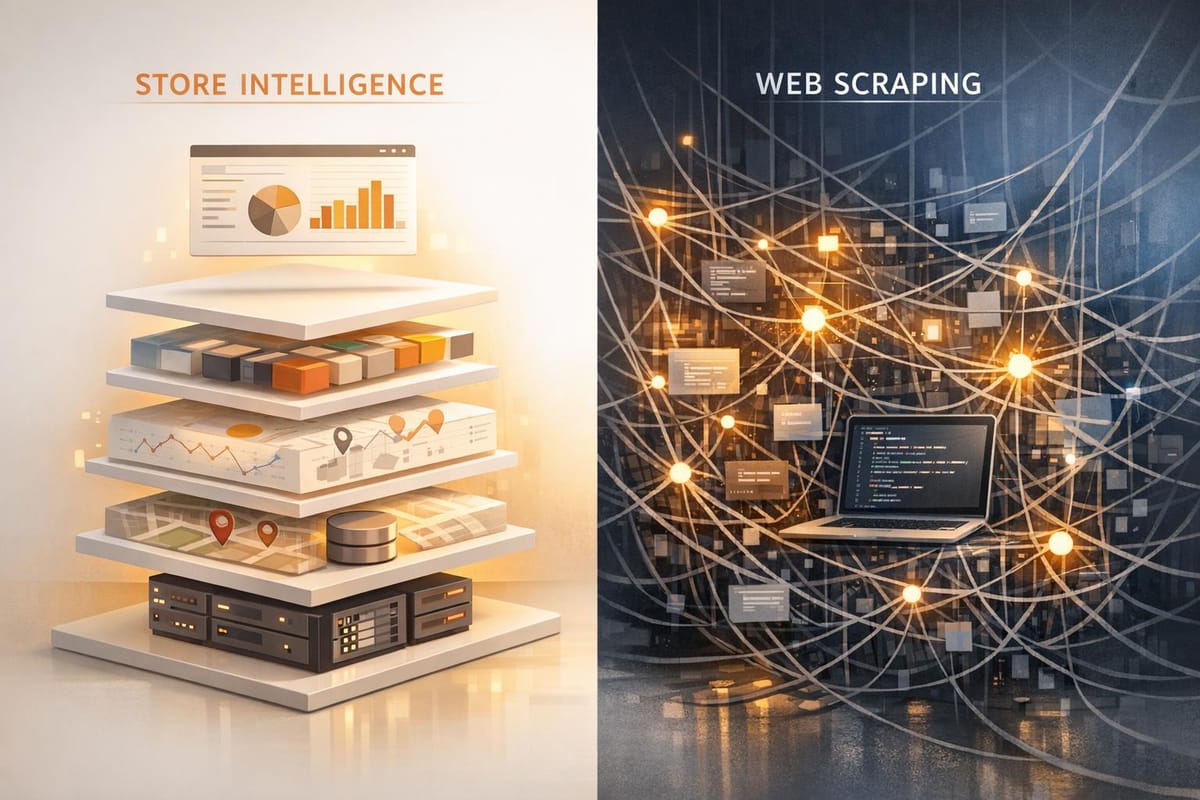
If you're deciding between web scraping and store intelligence for ecommerce data collection, here's the short answer:
- Web scraping is best for extracting raw, specific data like product prices or reviews directly from websites. It’s flexible but requires ongoing technical maintenance and infrastructure.
- Store intelligence provides ready-to-use insights, combining data from multiple sources with features like revenue estimates, technology stacks, and decision-maker contacts. It’s less technical but comes at a higher cost.
Key Takeaways:
- Web scraping is ideal for granular, real-time data needs but demands constant upkeep.
- Store intelligence offers broader, processed insights with no maintenance but limits customization.
- Your choice depends on your goals: speed and ease (store intelligence) vs. control and depth (web scraping).
Quick Comparison
| Feature | Web Scraping | Store Intelligence |
|---|---|---|
| Data Type | Raw data (prices, reviews, etc.) | Processed insights (revenue, contacts) |
| Setup | Requires technical expertise | Managed by provider |
| Scalability | Challenging, resource-intensive | Easily scalable |
| Cost | Lower initial costs | Higher subscription fees |
| Maintenance | High; scripts need updates | None; fully managed |
| Output | CSV/JSON; requires cleaning | Ready-to-use dashboards and APIs |
Choose web scraping for targeted, customizable data collection. Opt for store intelligence if you want actionable insights without technical hassle.
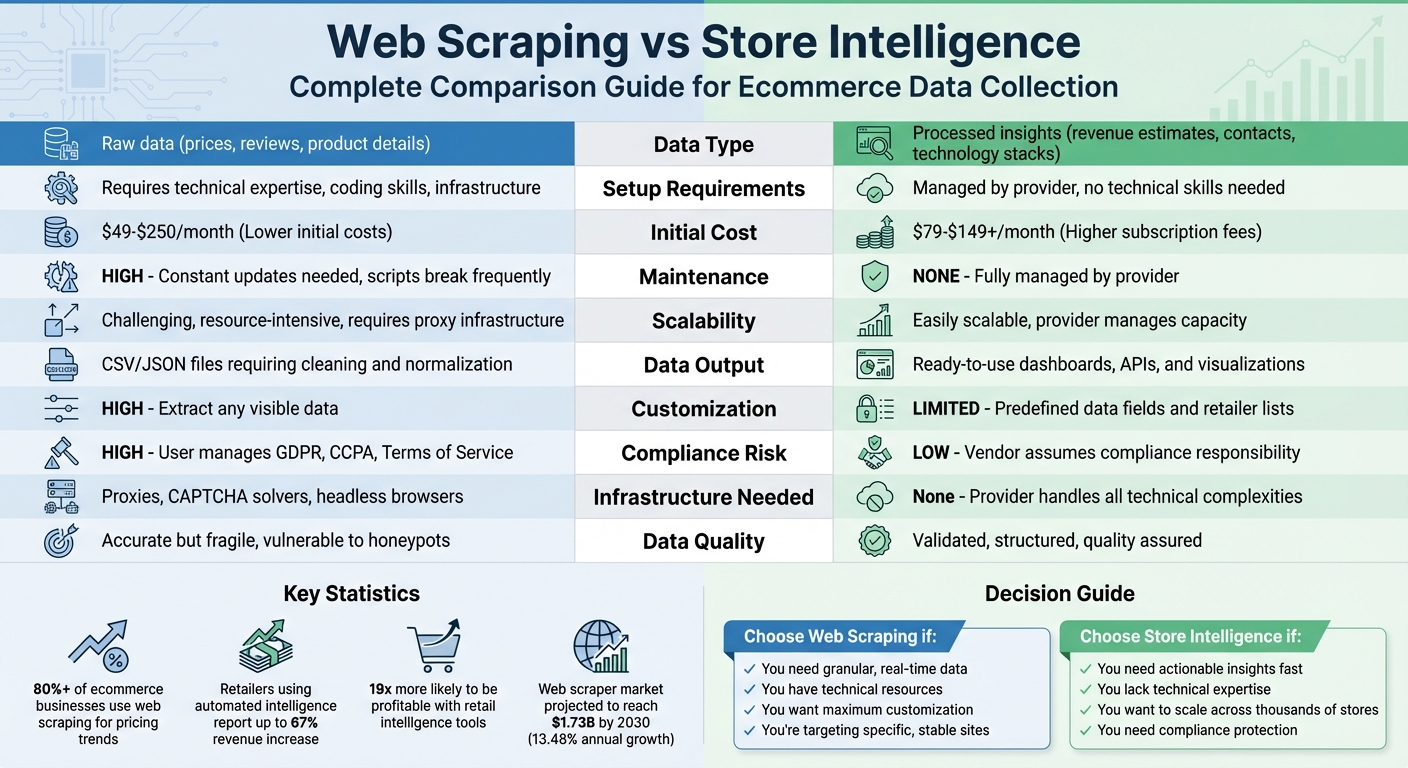
Web Scraping vs Store Intelligence: Complete Feature Comparison
How to Scrape E-Commerce Websites With Python
What is Web Scraping?
Web scraping is the process of automating the extraction of publicly available data from websites. It works by using crawlers to send HTTP requests, analyze the structure of HTML, and extract specific elements like product names, prices, or other details. The collected data is then organized into formats such as CSV or JSON for further use. In the ecommerce world, web scraping tools are commonly used to gather product details, pricing information, and customer reviews from online platforms. For websites that rely heavily on JavaScript, headless browsers are often employed to render the content and ensure all data is captured. The methods used can vary depending on how complex the target site is.
Interestingly, more than 80% of ecommerce businesses use web scraping to track pricing trends and understand consumer behavior. The data collected typically includes product names, SKUs, prices (both retail and sale), stock levels, technical specifications, image links, customer reviews, and shipping details. This information is then used for tasks like competitive analysis, dynamic pricing strategies, and creating market research reports.
Common Web Scraping Techniques
There are three main techniques for web scraping, each suited to different types of ecommerce sites:
- Static HTML parsing: This method extracts data directly from the server's HTML response using tools like BeautifulSoup. It’s a great option for simpler websites that load quickly and don’t rely heavily on JavaScript.
- Headless browser automation: For modern, dynamic sites that use JavaScript to load content, automated browsers like Chrome or Firefox are used to render the pages and capture the data.
- AI-driven adaptive scraping: This advanced approach uses machine learning to identify patterns and extract data, even from websites that frequently change their layouts. Unlike the first two methods, it doesn’t rely on fixed CSS selectors.
The choice of technique depends largely on the website being targeted. For instance, a Shopify store with server-side rendering might only need static HTML parsing, while a React-based marketplace would require headless browsing to handle dynamically loaded content.
Web Scraping Challenges
Web scraping comes with its fair share of challenges, especially when dealing with ecommerce platforms.
Anti-bot defenses are one of the biggest hurdles. Measures like CAPTCHAs, IP blacklisting, and browser fingerprinting can block scrapers. To get around this, developers often use rotating proxies, including residential proxies, to avoid detection. However, if these defenses are triggered, the scraper could face a permanent ban.
Maintenance is another ongoing issue. Since scrapers rely on specific HTML structures, any updates or redesigns to a website can break the scripts. This means developers must regularly monitor and update their scraping rules - an effort that can take hours each week, even for a small number of websites.
Scalability is also a concern. Scraping thousands of products in a short period requires significant server resources and robust error-handling systems. Many modern ecommerce sites load data dynamically, which often necessitates the use of resource-heavy headless browsers.
Lastly, legal and ethical risks need to be addressed. Scraping data from behind login walls or violating a website’s Terms of Service can lead to legal actions, such as cease-and-desist letters or lawsuits. Even when scraping publicly accessible data, pricing discrepancies based on geo-location can complicate things. For example, a scraper using a U.S.-based proxy might see different prices than one using a European IP address, which could affect the accuracy of the collected data.
What is Store Intelligence?
Store Intelligence is a SaaS-based tool that consolidates ecommerce data from millions of online stores, delivering actionable insights without requiring manual data extraction or technical know-how. Unlike web scraping, which gathers raw data, Store Intelligence focuses on providing ready-to-use business insights that you can act on immediately.
Web scraping often involves juggling proxies, managing headless browsers, and constantly updating scripts. Store Intelligence eliminates these complexities, offering structured data that goes beyond basic product details. It includes enriched attributes like revenue estimates, technology stacks, and direct contact information for key decision-makers.
"If you could collect all this valuable data manually, it would require an extraordinary amount of time and effort... manual collection is inefficient for product development." - RetailGators
The platform integrates data from web crawls, APIs, and third-party sources, cleaning and standardizing it into a unified format. This ensures consistency across all stores, with currency conversions, standardized units, and duplicate entries removed. The result? A reliable source of market intelligence, accessible via user-friendly dashboards, APIs, or even direct CRM integrations.
Store Intelligence Features
Store Intelligence simplifies complex processes and offers features designed to remove technical barriers: (See our Shopify store guides for more on these strategies.)
- Advanced filtering: Segment stores based on factors like technology stack, estimated revenue, geographic location, or social media presence - all without needing to write code.
- Real-time updates: With online retailers adjusting prices 15–20 times per month on average, having up-to-date data is critical. Store Intelligence continuously monitors and refreshes data in real time, ensuring your strategies are always based on the latest information.
- CRM and API integration: Forget exporting CSV files. Store Intelligence feeds data directly into platforms like Power BI, Tableau, or your CRM, streamlining workflows and keeping your team equipped with the most current data.
- Automation workflows: Automate tasks like adding new stores that match your target profile to your outreach list or alerting your team when a competitor adjusts its pricing. These workflows run around the clock, requiring no manual intervention.
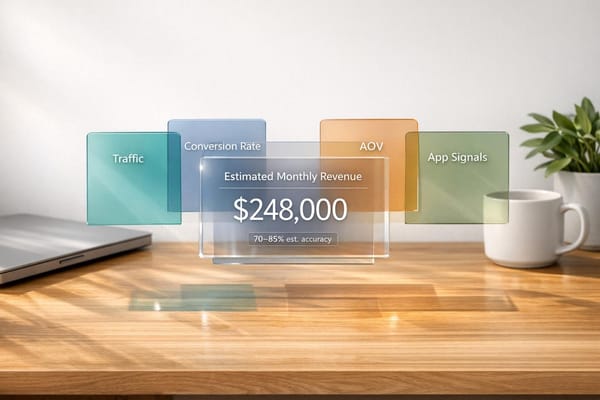
The enriched data provided by Store Intelligence goes far beyond what basic scraping can deliver. It includes firmographics (such as company size and employee count), technographics (platforms and apps a store uses), revenue estimates based on traffic and transactions, and even contact details for store owners and decision-makers. Compiling this level of detail manually for just a few stores would take weeks.
Business Benefits of Store Intelligence
Store Intelligence eliminates the need for technical expertise. You don’t need developers to maintain scrapers, manage proxies, or fix scripts when websites change. The platform handles all the infrastructure, freeing your team to focus on analyzing the data and making strategic decisions.
Scaling up is seamless. While manual data collection is impractical at scale, and traditional web scraping demands significant server resources, Store Intelligence can track millions of stores simultaneously. Organizations using advanced data acquisition have reported up to 3x faster data speeds, while AI-powered systems reduce manual intervention by as much as 80%.
Store Intelligence also transforms lead generation and market research. For lead generation, it allows you to quickly identify and qualify prospects with Shopify brand prospect lists. Instead of spending hours researching individual stores, you can filter millions to find businesses that meet your criteria - like Shopify stores earning $500,000–$1,000,000 annually or Amazon sellers in specific niches. With contact information included, you can move straight to outreach.
For market research, the platform makes it easy to answer big questions in minutes. Want to know how many stores in a specific industry use a certain technology? Need to monitor pricing trends across a product category? Looking for market gaps where competitors are falling short? Store Intelligence provides these insights quickly. For instance, in 2025, a mid-sized grocery chain partnered with RetailGators to monitor competitive pricing for 5,000 SKUs. By identifying 300 underpriced products, they implemented strategic changes that added $2.3 million in annual revenue.
Additionally, compliance is built into the system. Store Intelligence adheres to GDPR, CCPA, and PIPL regulations, eliminating the legal risks associated with DIY scraping, like violating Terms of Service or accessing data improperly. The platform ensures you get the insights you need while handling the responsibility of ethical data collection.
Store Intelligence vs Web Scraping: Side-by-Side Comparison
When deciding between these two approaches, it's essential to weigh how much effort each requires and the type of insights they deliver. Web scraping focuses on pulling raw data from specific sources like competitor product pages, online marketplaces, or social media profiles. On the other hand, store intelligence blends external and internal data, layering in historical trends and cross-platform comparisons to support strategic decision-making.
The scope of these methods varies significantly. Web scraping dives deep but remains narrowly focused, often extracting full product catalogs from a few selected sources. In contrast, store intelligence casts a wider net, gathering data from marketplaces, comparison engines, and more. For instance, some platforms track billions of products across hundreds of thousands of stores. This expansive view helps businesses identify new competitors and market trends that might go unnoticed with a limited scraping approach. Beyond data collection, the breadth of coverage is a defining difference between these two methods.
"Price crawling is extracting large amounts of raw pricing data from the web while price intelligence goes deeper by combining the high-quality crawled data with quality assurance, analysis, and reporting."
– Zyte
Efficiency and scalability are critical factors in this comparison. Web scraping requires constant engineering oversight to handle anti-bot systems and adapt to website updates. Store intelligence platforms, however, manage these challenges behind the scenes, offering structured insights through intuitive dashboards and APIs. The benefits are clear: companies using advanced retail intelligence tools are 19 times more likely to be profitable and 23 times more likely to attract customers. By offloading the technical complexities, store intelligence allows teams to focus on strategy rather than the mechanics of data extraction.
Comparison Table: Store Intelligence vs Web Scraping
| Criteria | Web Scraping | Store Intelligence |
|---|---|---|
| Data Sources | Competitor URLs, social media, and direct web pages | Marketplaces, internal CRM/POS systems, historical databases, and comparison shopping engines |
| Coverage | Narrow and deep; limited to chosen targets | Broad; includes market-wide trends and insights into new entrants |
| Data Freshness | Real-time extraction from live sources | Combines real-time signals with historical patterns |
| Technical Setup | High; requires ongoing maintenance and proxy management | Low; provided via managed dashboards and APIs |
| Maintenance | Constant; prone to issues from website changes | Fully handled by provider using adaptive methods |
| Primary Output | Raw data formats (CSV, JSON, HTML) | Actionable insights, visualizations, and predictive analytics |
| Scalability | Challenging; demands significant infrastructure and proxy costs | Highly scalable; infrastructure managed by provider |
| Data Quality | Accurate but fragile; requires manual normalization | Validated, structured, and automatically normalized |
Pros and Cons of Each Approach
Let’s break down the advantages and drawbacks of web scraping and store intelligence to help you weigh your options. Both methods come with trade-offs that can impact costs, strategy, and overall effectiveness.
Web scraping is highly customizable, allowing you to extract a variety of publicly available data without worrying about API rate limits. This flexibility makes it a popular choice for tasks like lead generation, where you can build detailed databases with names, emails, and social media profiles to enhance your sales funnel. The upfront cost can also be relatively low, with tools like Apify starting at $49 per month and WebHarvy offering one-time licenses for $139.
But here’s the catch: maintaining web scrapers can become a headache. Websites frequently update their HTML structures, meaning your scrapers can break and require constant upkeep. Many modern ecommerce websites also employ advanced anti-bot techniques, such as honeypots, browser fingerprinting, and bandwidth throttling, which can introduce inaccuracies into your data. On top of that, using web scraping often necessitates extra infrastructure, like proxies and CAPTCHA solvers. It’s worth noting that the web scraper software market is expected to grow significantly, reaching $1.73 billion by 2030 with an annual growth rate of 13.48%.
On the other hand, store intelligence takes the technical burden off your shoulders. Providers handle everything - proxy management, anti-bot challenges, and script updates - behind the scenes. Instead of raw data files that require extensive cleaning, you receive actionable insights through dashboards, historical trends, and cross-platform product matching. For instance, retailers using automated intelligence for pricing strategies have reported revenue increases of up to 67%. Another major benefit? Compliance risks like GDPR and CCPA are managed by the vendor, reducing your legal exposure.
However, store intelligence comes with its own limitations. The higher subscription costs can be a barrier, and the level of customization is often restricted. You’re limited to the retailer lists and data fields provided by the platform, which might not meet your needs if you’re targeting niche competitors or specific product attributes. Additionally, while the "no infrastructure" model saves engineering resources, it also means giving up control over how and when data is collected.
To make things clearer, here’s a side-by-side comparison of the pros and cons for both approaches:
Pros and Cons Table: Web Scraping vs Store Intelligence
| Aspect | Web Scraping | Store Intelligence |
|---|---|---|
| Customization | High; can extract visible data like reviews, images, and variants | Limited to predefined retailer lists and data fields |
| Initial Cost | Low to moderate ($49–$250/month for tools) | High; subscription-based pricing |
| Maintenance | High; frequent updates needed | None; fully managed by the provider |
| Infrastructure | Requires proxies, CAPTCHA solvers, and headless browsers | No infrastructure needed; provider handles technical complexities |
| Data Output | Raw formats (CSV, JSON) requiring cleaning and normalization | Decision-ready insights with analytics and visualizations |
| Compliance Risk | High; user manages GDPR, CCPA, and terms of service | Low; vendor assumes compliance |
| Scalability | Challenging; requires significant proxy and infrastructure costs | Highly scalable; provider manages capacity |
| Data Integrity | Vulnerable to honeypots and poisoned data | Validated and structured with quality assurance |
| Historical Access | Typically real-time snapshots only | Includes historical catalogs and pricing trends |
This comparison highlights the trade-offs between flexibility and ease of use, helping you determine which approach aligns best with your goals.
When to Choose Store Intelligence Over Web Scraping
Opt for store intelligence when you're dealing with large-scale lead generation or ecommerce profiling and want to sidestep the technical headaches. Web scraping demands advanced programming skills and constant upkeep to bypass anti-bot defenses. Store intelligence, on the other hand, offers ready-to-use, structured data, eliminating these technical challenges. This makes it a go-to solution for businesses seeking efficiency and ease.
Web scraping typically yields raw HTML, which requires significant effort to clean and process. In contrast, store intelligence provides structured data - covering behavioral, transactional, and demographic insights - that's ready to plug directly into CRM workflows. Its seamless integration through APIs makes it particularly appealing for businesses looking to automate and enrich their data processes.
"Web scraping for professional purposes such as long-term data acquisition... requires constant maintenance and management." – Adomas Sulcas, Former PR Team Lead, Oxylabs
Another standout benefit of store intelligence is its ability to predict trends. Unlike traditional scraping, which focuses on historical data, store intelligence uses predictive analytics to forecast consumer demand and market trends. This forward-looking capability helps businesses stay ahead of the curve in an ever-changing market.
Store Intelligence Use Cases
Store intelligence shines in practical applications, offering more than just clean data and predictive insights. For ecommerce profiling, it identifies crucial details like a store’s technology stack, location, and behavioral triggers - no custom scrapers required. These insights can be monitored and updated automatically, saving time and effort compared to manual extraction.
When it comes to large-scale lead generation, store intelligence excels by pulling detailed business profiles, including addresses, emails, and phone numbers, directly from directories. These profiles can then be exported into CRM workflows with ease. With advanced filtering options, you can pinpoint high-value B2B prospects based on factors like revenue, technology stack, or location - all without writing a single line of code.
Store intelligence also streamlines CRM enrichment by automatically updating lead records with fresh data via API. For example, one global ecommerce retailer saw a 10% improvement in competitive pricing responsiveness and a 5% revenue boost within three months of adopting automated data collection. Achieving this level of automation with custom web scraping would be far more challenging, as it requires constant script updates to adapt to changing website structures.
Recommended StoreCensus Plan
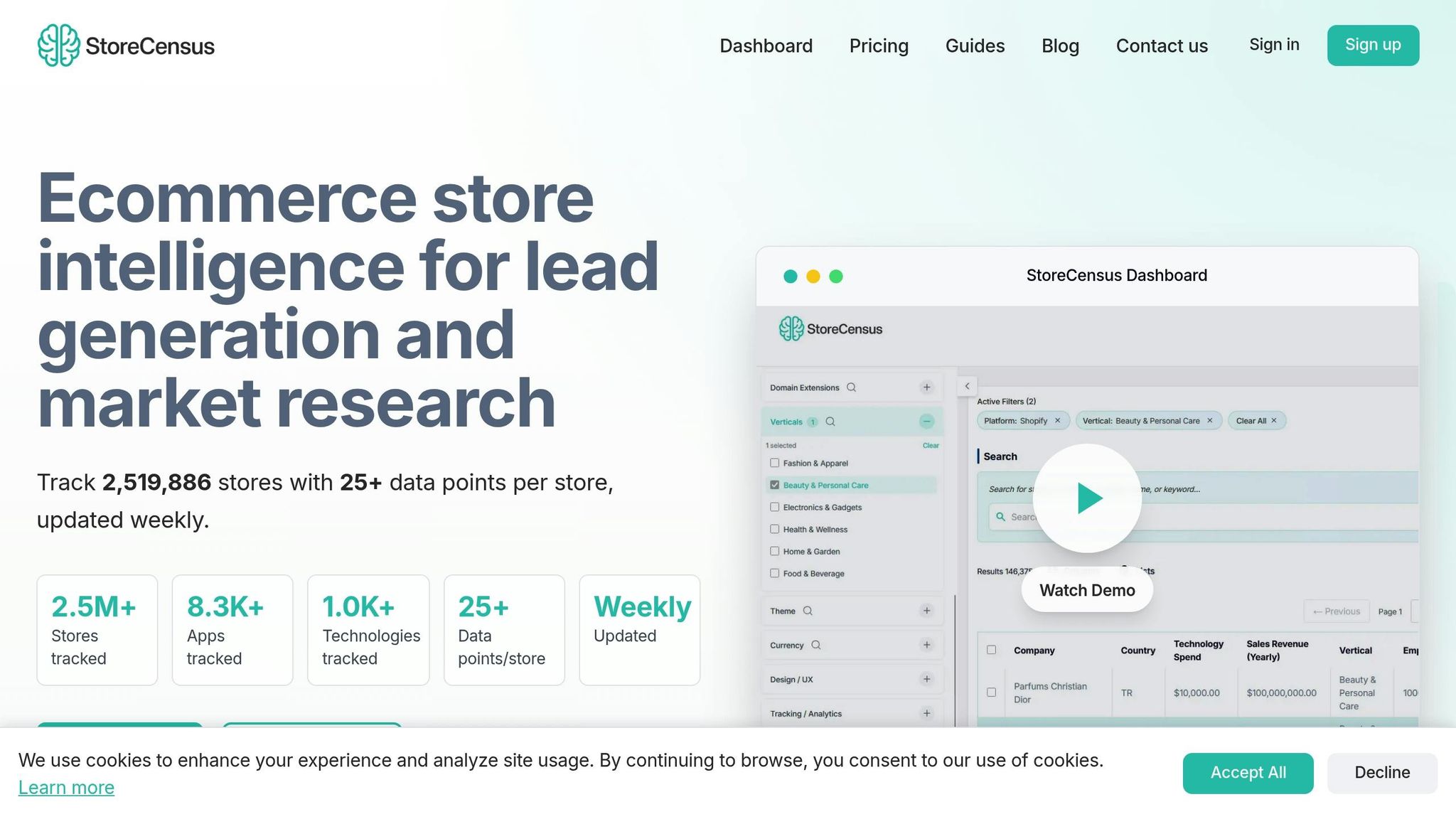
To take full advantage of store intelligence, selecting the right StoreCensus plan is key. For businesses needing advanced filtering, API access, and automation tools, the StoreCensus Professional plan at $79/month offers 15,000 credits, 10 automation flows, and a built-in CRM with access to decision-maker contacts. For those looking to scale further, the Growth plan at $149/month provides 35,000 credits, 25 automation flows, team access, and lookalike audience capabilities.
Conclusion: Choosing the Right Data Acquisition Strategy
When deciding between web scraping and store intelligence, the choice boils down to your specific needs and resources. Web scraping gives you complete control over raw data, making it a great option if you have the infrastructure and team to handle ongoing maintenance and technical challenges. On the other hand, store intelligence delivers ready-to-use insights with minimal effort, perfect for businesses needing quick, actionable data for decisions like competitive pricing or lead generation.
Web scraping works well for smaller projects with stable data sources. However, scaling up to monitor 50 or more sites can quickly lead to increased complexity and maintenance headaches. Store intelligence solutions, such as StoreCensus, eliminate these hurdles by providing structured, API-ready data that integrates seamlessly into tools like your CRM - no coding required. This makes it a practical choice for businesses prioritizing speed and ease of use.
"Wrong choices compound fast. The world of e-commerce web scraping is moving toward real-time everything - pricing, inventory, competitive moves. Make the right choice today or spend the next two years fixing costly mistakes." – Forage AI
Think about your timeline and scale. If you’re aiming to launch a lead generation campaign in days rather than weeks, store intelligence offers a faster, lower-risk path. For instance, the StoreCensus Professional plan, priced at $79/month, provides a straightforward, efficient solution for rapid deployment without the need for technical expertise.
FAQs
How does store intelligence compare to web scraping for collecting ecommerce data?
Web scraping is the process of using programs to visit ecommerce websites and extract raw data, such as HTML content or API responses. While it offers flexibility, it often demands coding skills, constant updates to handle changes in website structures, and workarounds for anti-bot measures like CAPTCHAs or IP blocks. On top of that, the data collected is usually unstructured, requiring extensive cleaning and organizing before it can be effectively used.
Store intelligence platforms, such as StoreCensus, make this process much easier. These tools deliver pre-structured, ready-to-use profiles of online stores, complete with details like technology stacks, estimated revenue ranges, industry categories, and verified contact information. Unlike web scraping, store intelligence platforms eliminate the hassle of technical setups, data cleaning, and navigating blocking mechanisms. This allows businesses to quickly access actionable insights without the usual headaches.
What makes store intelligence a better option for gathering ecommerce data compared to web scraping?
Store intelligence tools like StoreCensus make gathering e-commerce data quick and straightforward. With just a few clicks, you can filter stores based on criteria like revenue range, industry, location, or tech stack. Plus, you can access detailed insights such as estimated revenue, app usage, and verified contact details - all neatly organized in a single dashboard. Everything is pre-processed, structured, and ready to use, cutting down on time and effort.
In contrast, web scraping is a more complex and time-consuming process. It requires technical know-how to create and maintain custom scripts, manage proxies, tackle anti-bot measures, and clean up raw data. On top of that, constant updates are needed to adapt to changes on websites. Store intelligence tools eliminate these headaches by delivering accurate, up-to-date data in a clean, exportable format, making them a more efficient and user-friendly alternative.
When should a business use store intelligence instead of web scraping for ecommerce data?
Businesses looking for ready-to-use, high-quality ecommerce data should consider tools like StoreCensus. With StoreCensus, you gain access to detailed insights on over 2 million Shopify stores, including app usage, estimated revenue ranges, industry classifications, and verified contact information. The data is pre-structured, searchable with advanced filters, and downloadable in user-friendly formats - saving teams countless hours of effort and eliminating the need for custom-built scrapers.
In contrast, web scraping demands technical skills, ongoing infrastructure maintenance, and constant updates to handle challenges like CAPTCHAs, IP blocks, and website changes. While scraping offers flexibility for custom projects, it often results in raw data that requires significant cleaning and processing. For businesses that value efficiency, compliance, and quick access to actionable insights, store intelligence tools provide a more practical and cost-efficient alternative.