How AI Identifies High-Intent Ecommerce Leads
How AI uses app installs, revenue shifts, and tech-stack gaps to spot high-intent ecommerce stores and automate prioritized outreach.

AI is transforming how ecommerce businesses find and prioritize leads. Instead of relying on outdated methods like cold emails and Shopify brand prospect lists, AI focuses on precision. It tracks real-time signals - like app installs, revenue changes, or tech gaps - to identify stores ready to buy. This approach improves response rates from 1–3% to 15–25%.
Key Takeaways:
- Better Timing: AI monitors millions of stores with 99.2% accuracy to catch leads during active buying cycles.
- Actionable Signals: Tracks app installs, revenue growth, and competitor app removals to flag high-priority leads.
- Smarter Targeting: Filters leads using micro-niche criteria like “Shopify beauty brands earning $1M–$5M without Klaviyo.”
- Improved Results: AI-driven outreach converts up to 3× better than traditional methods.
By integrating with tools like HubSpot or Salesforce, AI automates lead scoring and outreach, ensuring no opportunity slips through the cracks. Platforms like StoreCensus make this process seamless, helping sales teams focus on leads with the highest potential.
How to Use AI to Get More Leads for Your Business
How AI Analyzes Data to Identify High-Intent Leads
AI doesn't just skim the surface when it comes to spotting high-intent leads. Instead of relying on outdated contact lists, it digs into dynamic, real-time activities like app installations, revenue shifts, and catalog updates. This method keeps the data fresh and relevant, making it easier to identify patterns that indicate immediate purchase intent.
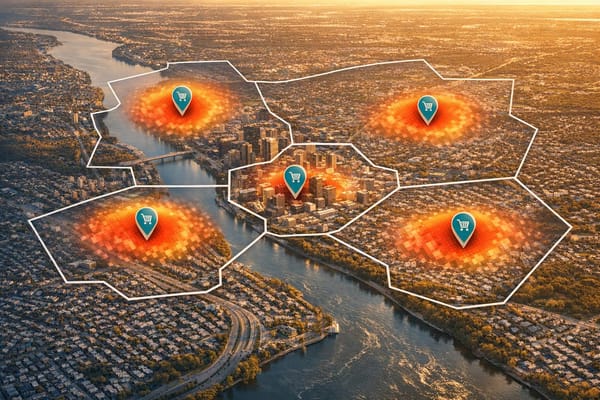
By gathering and layering data from over 25 store points, updated weekly, AI builds detailed business profiles. Take StoreCensus, for example - it tracks over 2,011,362 stores with an impressive 99.2% accuracy. It monitors everything from app usage to traffic levels. When certain signals align - like a Shopify beauty brand earning $1M–$5M annually that uses ReCharge but hasn’t adopted Klaviyo - the system flags it as a high-priority lead with a clear need.
Key Data Signals AI Tracks
AI uses five main categories of signals to evaluate and score leads:
- Tech stack changes: These include app installations or removals, theme updates, or new integrations. For instance, a store adding Gorgias for customer service or Meta Pixel for advertising shows they’re actively investing in growth.
- Growth indicators: Revenue band updates and traffic increases are key markers. A store jumping from $100K to $250K in estimated revenue signals scaling needs and a bigger budget.
- Business activity signals: Catalog expansions, new social media accounts, or preparations for peak sales periods are strong indicators. For example, launching an Instagram account 30 days before Black Friday reflects operational momentum.
- Platform usage data: Stores with high traffic (25K+ monthly visitors) or specific technology setups often indicate strong demand.
- Competitive signals: Actions like uninstalling a competitor’s app create a narrow but valuable window for outreach.
By combining these signals into micro-niche filters, AI can refine its targeting. Instead of broadly targeting "all Shopify stores", it can pinpoint groups like "Shopify + $1M–$5M Revenue + Beauty + Missing Klaviyo." This precision can boost response rates from the typical 2–3% to an impressive 18–25%.
The Role of Structured Data in Lead Scoring
Structured data is the backbone of accurate lead scoring. It transforms real-time signals into actionable insights, eliminating the need for outdated manual research. Platforms like StoreCensus conduct weekly automated crawls, ensuring every data point is up-to-date. This means sales teams can work with live, reliable intelligence instead of outdated spreadsheets.
Each store profile is enriched with normalized tech stack classifications, revenue estimates, and SMTP-verified contact details, all formatted for seamless CRM integration. This creates a foundation for automated lead prioritization. For example, a 5-star lead - one that perfectly aligns with budget, need, and timing - can close at a rate of 40–60%, compared to just 10% when all leads are treated equally.
Structured data also helps avoid "lead death." If a prospect isn't ready to buy immediately, the system sets a 3–6 month reminder, ensuring no opportunity is lost. This is crucial because about 60% of prospects need a longer sales cycle.
"The best prospecting system isn't about finding more leads. It's about losing fewer of the ones you already found." – StoreCensus
The moment a store's attributes change - like uninstalling a competitor’s tool or hitting a traffic milestone - automated workflows kick in. This shifts outreach from reactive guesswork to proactive engagement, reaching prospects at the exact moment their intent is at its peak.
Using Store Activity and Growth Indicators
AI doesn't just observe what a store is - it tracks what a store does. Weekly automated scans capture every meaningful update: a new app installation, a theme change, a surge in traffic, or a shift in revenue tier. These updates reveal when a business is actively investing, scaling, or exploring new solutions. For example, if a store adopts a new theme or adds customer engagement tools, it’s a clear signal of active investment.
Revenue band shifts are especially insightful. When a store’s estimated monthly revenue jumps from $100,000 to $250,000, it enters a new budget category with evolving priorities. Similarly, traffic milestones help refine lead quality - stores with significant visitor growth showcase both market demand and accessible decision-makers.
Gap analysis takes this further. AI identifies mismatches between a store's tools and its potential. For instance, a high-traffic store still relying on basic tools, or a brand running Meta Ads without advanced email automation, signals untapped opportunities. These insights highlight actionable areas for outreach.
Historical tracking adds another layer of precision. AI monitors when a store uninstalls a competitor’s app, creating a narrow window of opportunity. This is when businesses are actively shopping for replacements, making it the ideal time to engage.
"When a store matches your trigger criteria, they're in an active buying cycle. Your message arrives exactly when they need it most".
These dynamic insights pave the way for even sharper lead targeting through segmentation.
Advanced Segmentation for Targeting High-Intent Leads
AI doesn’t stop at collecting activity data - it organizes it into highly targeted, actionable segments. Once store activity and growth signals are identified, advanced segmentation transforms millions of stores into precise, high-intent lists. Instead of casting a wide net at "all Shopify stores", sales teams can zero in on micro-niches like: "Shopify beauty brands earning $1 million–$5 million annually, using subscriptions but lacking email automation." This level of precision can boost response rates from 2–3% to as high as 18–25%.
Segmentation criteria go beyond just revenue and tech stack. Geographic location is crucial for agencies offering localized services or compliance expertise. Tracking accessibility compliance can uncover stores at risk of ADA violations - an emerging opportunity for legal-tech and development agencies. Meanwhile, product catalog size can reveal operational complexity, allowing teams to tailor their pitch to match the store’s scale.
StoreCensus, for instance, monitors over 2.5 million stores with 99.2% accuracy, enriching each store profile with 25+ data points updated weekly. This structured data integrates directly into CRM systems, enabling automated lead prioritization. A 5-star lead - meeting all criteria for budget, need, and timing - has a closing rate of 40–60%, compared to just 10% for less-qualified leads. The secret? Ruthless prioritization: 60% of sales efforts should focus on 5-star leads, while 1-star leads are archived immediately.
Dynamic monitoring has revolutionized prospecting. Instead of manually researching Shopify stores, sales teams now use "evergreen automations" that trigger outreach the moment a store meets specific criteria - like installing a Meta Pixel or hitting a traffic benchmark. This proactive approach ensures sales teams engage prospects when their intent is at its peak.
Real-Time Monitoring and Automated Alerts
AI platforms like StoreCensus conduct weekly scans across millions of online stores, pinpointing the exact moment a business shows buying intent. With high-accuracy tracking, StoreCensus monitors technical and business changes that signal readiness to invest. For example, actions like adding Klaviyo, switching to Shopify's "Dawn" theme, or uninstalling competitor apps can indicate a store is evaluating new solutions. These moments create a short, critical window where outreach can connect with prospects at just the right time.
The platform tracks over 8,300 apps and more than 1,000 technologies, creating a live feed of real-time changes. This helps sharpen lead prioritization by turning signals - such as a store's revenue increase from $100,000 to $250,000 or the creation of a new social media account - into actionable insights. For instance, if a store removes a competitor's subscription app, it’s a strong indicator they’re in transition, offering an ideal opportunity to propose migration support or a free trial.
Detecting App Installations and Business Activity Signals
App installations provide insight into what a business is focusing on. For example, adding ReCharge suggests a commitment to subscriptions, while installing Gorgias points to scaling customer support. StoreCensus identifies these changes and can trigger automated workflows to ensure timely outreach.
Theme changes are another key signal. Switching to a new design might indicate a rebrand, site refresh, or preparation for a major launch. These moments are perfect for offering services like conversion rate optimization, custom development, or design audits. Acting quickly is crucial - delayed outreach can mean missing the best engagement window. Automated alerts ensure you’re informed from the start.
One of the most impactful signals is competitor churn. When a store uninstalls a competing app, it indicates a high-intent opportunity. Automated triggers based on this data can result in conversion rates up to three times higher than standard outreach strategies.
Integration with CRM and Automation Systems
Real-time monitoring becomes even more powerful when integrated into your existing sales tools. StoreCensus connects with platforms like HubSpot, Salesforce, Apollo, and Instantly.ai, pushing alerts directly into your CRM or outreach software as soon as a store meets your criteria. Through Zapier, you can also link with over 5,000 apps, including Slack for team notifications and custom webhooks for proprietary workflows.
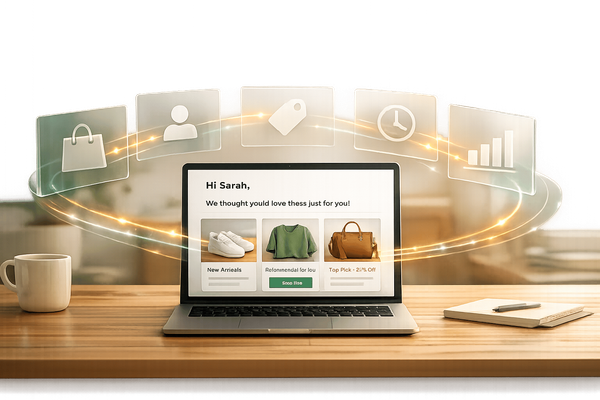
Starter plans include two automation flows, allowing you to set up "evergreen automations" that run continuously without manual input. For instance, you can configure a workflow to send a personalized email when a store in your target revenue range adopts a specific marketing tool. These intent-driven workflows deliver response rates 3–5× higher than traditional cold outreach.
Since roughly 60% of top prospects won’t be ready to buy for 3–12 months, continuous monitoring is essential. Instead of manually revisiting leads, automated reminders and tracking ensure no opportunities are missed. Over time, your pipeline evolves from a monthly reset to a steady stream of high-intent leads.
With seamless integration, AI-driven lead identification becomes a natural part of your sales process, keeping you ahead in the game.
Implementing AI-Driven Lead Identification in Sales Workflows
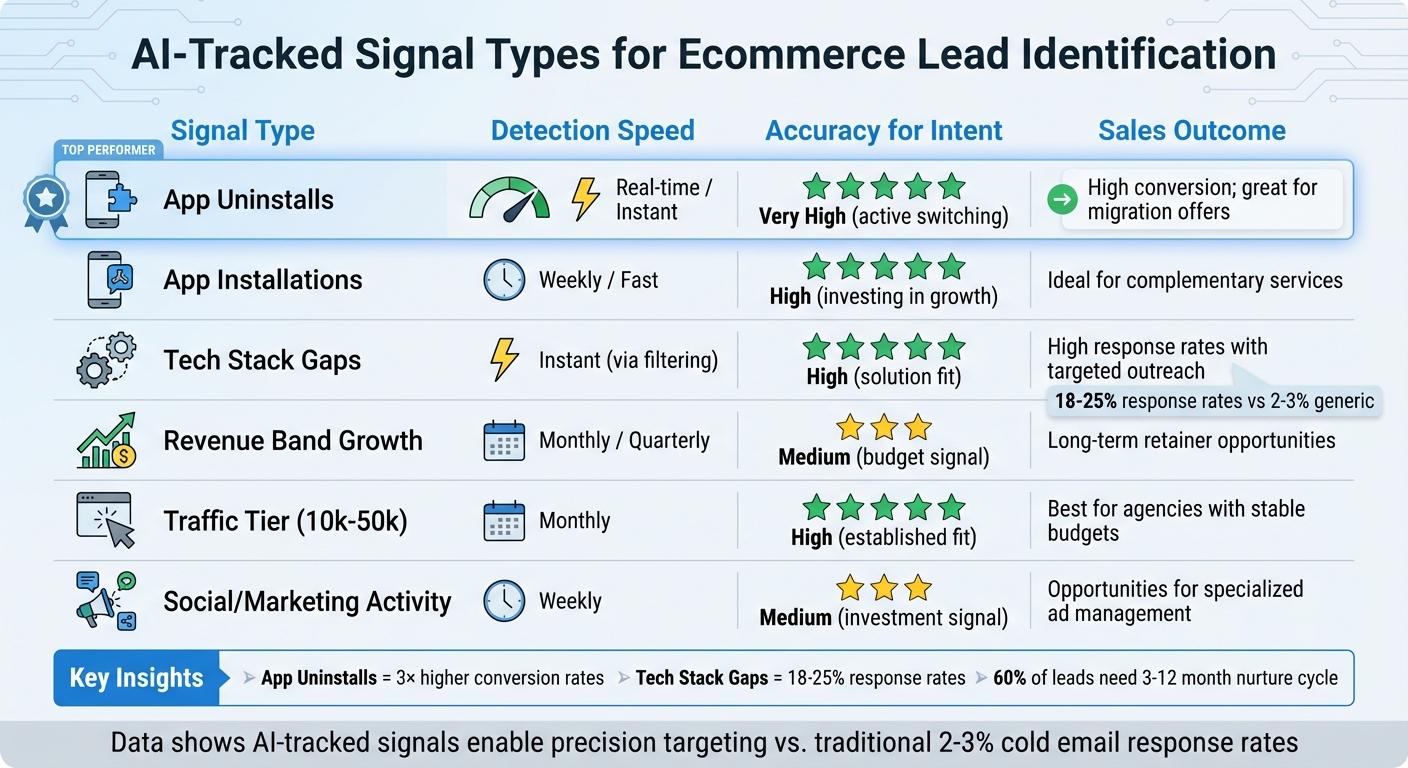
AI-Tracked Signal Types for Ecommerce Lead Identification: Detection Speed, Intent Accuracy, and Sales Impact
Step-by-Step Guide to Using AI for Lead Prioritization
Start with laser-focused filtering using AI tools to identify prospects based on specific criteria like technology usage, revenue brackets, or web traffic. For instance, if you run an email marketing agency, you could narrow your search to businesses using ReCharge but not Klaviyo. This kind of precise targeting ensures your outreach feels personal and directly relevant.
Next, apply strict prioritization using the STAMP framework (Size, Tech, Activity, Multiple contacts, Pain). This system scores leads from 0–100, helping you focus your energy where it matters most:
- Dedicate 60% of your efforts to "Hot" leads (scores of 71–100) - these are the perfect matches in terms of budget, timing, and needs.
- Spend 25% on "Warm" leads (scores of 41–70).
- Reserve 10% for nurturing long-term prospects.
This method helps avoid one of the most common sales pitfalls: poor lead qualification, which contributes to 67% of lost sales.
Keep every lead moving through a clear pipeline - Contacted → Replied → Negotiating → Closed → Rejected. This structure prevents leads from falling into the "Black Hole", where 40% of them vanish after an initial "not right now" response. If a prospect isn’t ready, schedule a specific follow-up date, such as 90 days for contract renewals or 30 days before a seasonal peak. Tools like StoreCensus can automate this process, ensuring no valuable context is lost.
Take Marcus, the founder of a Meta ads agency, as an example. He targeted high-traffic DTC apparel brands with active Meta Pixels and refined his pitch to "Turn 2x ROAS into 4x+." By tracking his leads through a structured pipeline and focusing on high-spend accounts, Marcus grew his monthly recurring revenue to $95,000 within a year, securing 12 clients and even creating a waitlist.
Finally, streamline your workflow by pushing qualified leads into your CRM via tools like Zapier or APIs. This eliminates manual data entry while preserving key details like tech stack, revenue, and activity data. Use evergreen automations to nurture leads consistently. Since 60% of top prospects won’t be ready to buy for 3–12 months, maintaining a compounding pipeline can drive 233% more revenue compared to starting fresh every month.
Once your prioritized leads are in place, the next step is understanding which signals have the biggest impact on your sales outcomes.
Comparing Signal Types for Sales Impact
Different AI-tracked signals vary in how quickly they can be detected, how accurately they indicate intent, and the kind of sales outcomes they drive. Knowing which signals align best with your offer ensures you’re using your time and resources effectively.
| Signal Type | Detection Speed | Accuracy for Intent | Sales Outcome |
|---|---|---|---|
| App Uninstalls | Real-time / Instant | Very High (active switching) | High conversion; great for migration offers |
| App Installations | Weekly / Fast | High (investing in growth) | Ideal for complementary services |
| Tech Stack Gaps | Instant (via filtering) | High (solution fit) | High response rates with targeted outreach |
| Revenue Band Growth | Monthly / Quarterly | Medium (budget signal) | Long-term retainer opportunities |
| Traffic Tier (10k–50k) | Monthly | High (established fit) | Best for agencies with stable budgets |
| Social/Marketing Activity | Weekly | Medium (investment signal) | Opportunities for specialized ad management |
Among these, app uninstalls stand out as the strongest signal of intent. They suggest dissatisfaction and a readiness to switch, leading to conversion rates up to three times higher than standard outreach. On the other hand, tech stack gaps enable highly personalized outreach, achieving 18–25% response rates compared to just 2–3% for generic cold emails. Revenue growth signals, while slower to detect, help identify businesses with the budget to invest in premium services.
Consider Sarah, who runs an email agency. She targeted Shopify subscription beauty brands earning between $1 million and $5 million that used ReCharge but not Klaviyo. By Month 5, she had converted 25% of her qualified leads, reaching $28,000 in monthly recurring revenue. By Month 12, her pipeline had grown to over 200 stores, resulting in 14 clients and $84,000 in monthly recurring revenue. Her success came from combining tech stack gap signals with revenue band filtering, effectively pinpointing both the challenges and the budgets needed to address them.
Conclusion
AI is reshaping ecommerce lead generation by replacing guesswork with precision and streamlining workflows through automation. Instead of manually compiling lists and losing a significant portion of qualified leads to disorganized spreadsheets, StoreCensus offers real-time intelligence that can save sales teams up to 60% of the time they would typically spend on research.
With advanced data signals, the shift from a "leaky bucket" method to a self-sustaining pipeline is a game-changer. Traditional prospecting might yield only 3 clients out of 300 leads. In contrast, AI-powered systems can nurture those leads over a 3–12 month sales cycle, potentially converting 10 clients from the same effort.
Real-time monitoring provides a competitive edge. For example, when a store uninstalls a competitor's app or hits a new revenue milestone, automated triggers prompt outreach at the perfect moment - capitalizing on peak intent. This demonstrates how AI bridges the sales gap by turning precise targeting into tangible results.
StoreCensus integrates discovery, qualification, and lead management into one platform. It ensures that tech stack intelligence, revenue insights, and activity signals stay connected to every lead throughout the sales cycle. With pricing starting at $39 per month and seamless integration with CRMs like HubSpot and Salesforce, the platform enables agencies and business owners to scale efficiently without increasing headcount.
This unified approach highlights how AI-driven insights are transforming the way ecommerce businesses generate and manage leads.
FAQs
What signals best predict a store is ready to buy?
Tracking the right signals can make all the difference. Signs like active growth, recent updates, and engaged behavior are great indicators of a store that's moving forward. For example, real-time app installs, hitting revenue milestones, or making changes to their technology stack show that a store is focusing on growth or fine-tuning its operations.
By keeping an eye on these activities, sales teams can time their outreach more effectively. Reaching out to stores that are actively investing in their ecommerce efforts increases the chances of turning those conversations into conversions.
How accurate are revenue and traffic estimates for lead scoring?
StoreCensus boasts a 99.2% accuracy rate for its store signal data, making its revenue and traffic estimates highly reliable for lead scoring. With weekly updates, the platform ensures its data remains both current and dependable.
How do I set up automated alerts in my CRM for high-intent changes?
To get automated alerts up and running, connect StoreCensus to your CRM through its API or built-in integrations. Set up real-time monitoring to keep tabs on key signals like app installs, growth patterns, or design changes. Use automation tools to trigger notifications or update your CRM when high-priority changes are detected. Make it a habit to review and adjust workflows regularly to keep your sales team informed with timely and actionable updates.