Why Phone Number Verification Matters for Ecommerce Leads
Ensure ecommerce leads are reachable, cut wasted outreach, boost conversions, and avoid TCPA fines using phone number verification and real-time validation.

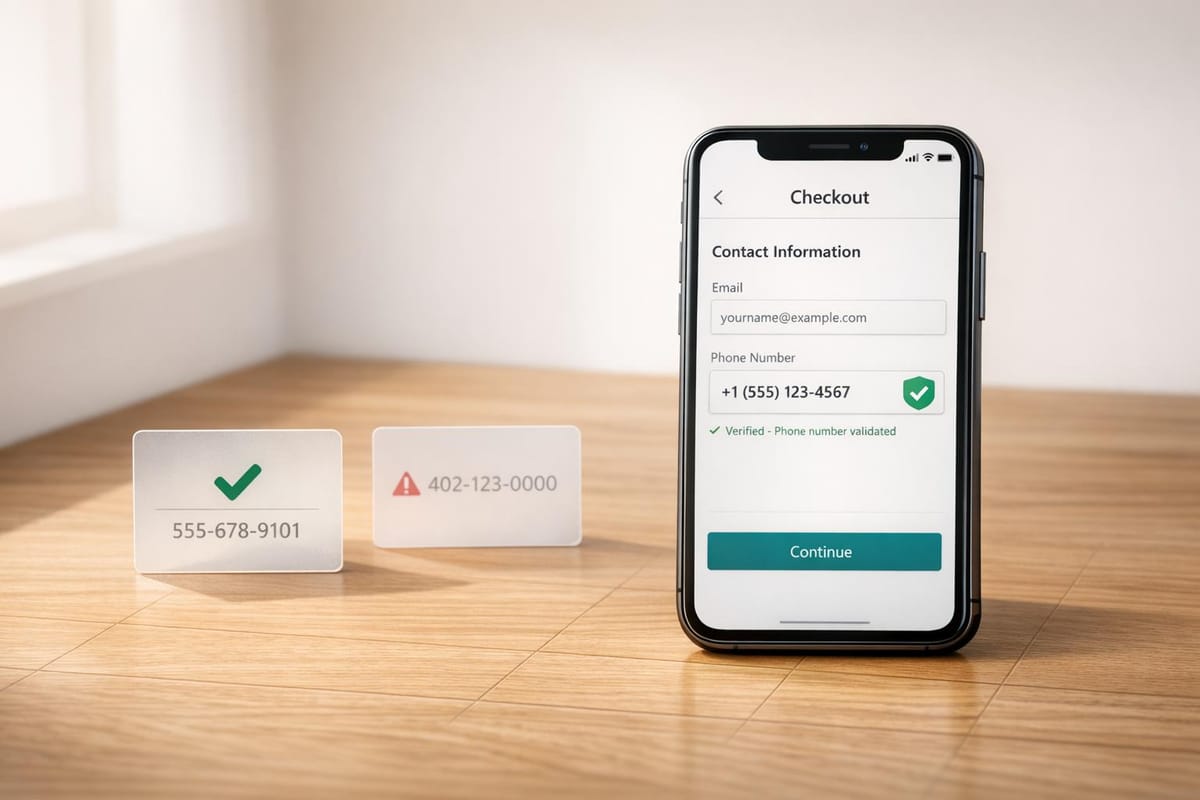
Phone number verification ensures your leads are reachable, reducing wasted marketing spend and improving sales efficiency. Without it, up to 38% of your leads could be invalid, costing you time and money. Verified numbers lead to 65% higher live connect rates, 35% better SMS deliverability, and 25% more engagement. They also help avoid costly compliance issues like TCPA fines, which can range from $500 to $1,500 per call.
Here’s why it’s critical for ecommerce:
- Improved Lead Quality: Filters out fake or inactive numbers, saving resources.
- Higher Conversion Rates: Verified leads convert 2–3 times more often.
- Cost Savings: Prevents wasted outreach and reduces delivery errors.
- Stronger Communication: Ensures order updates and campaigns reach customers.
Phone verification methods like carrier lookups, risk scoring, and real-time validation can transform your lead generation strategy. Businesses that invest in these tools see better results, from smoother operations to increased revenue.
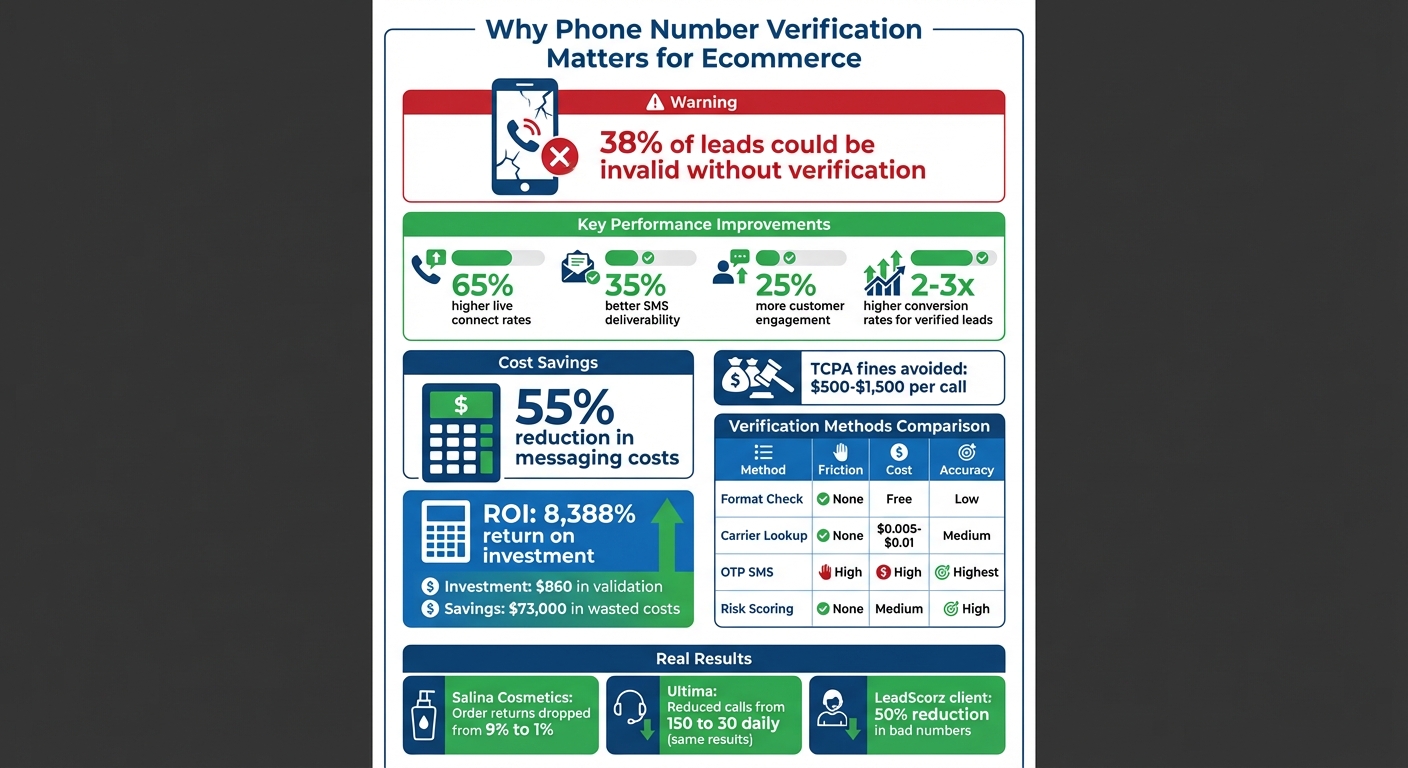
Phone Number Verification Impact on Ecommerce: Key Statistics and ROI
Benefits of Phone Number Verification for Ecommerce Leads
Better Lead Quality and Accuracy
Phone number verification ensures that only valid and accurate data enters your system. It checks if numbers follow proper country formats, identifies their carrier, and determines whether they are mobile, landline, or VoIP. This is crucial because non-fixed VoIP numbers, like Google Voice, are 3–5 times more likely to be linked to fraud compared to standard mobile numbers.
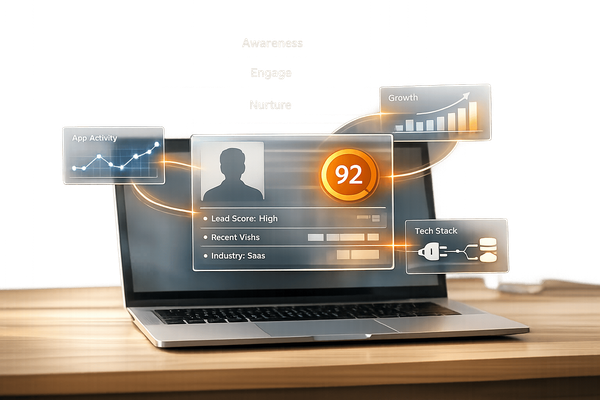
Modern tools take it further by providing Phone Activity Scores (ranging from 0 to 100) to help businesses prioritize leads that are reachable. Some systems even offer identity matching, linking phone numbers to the registered owner’s name and address for added authenticity. By filtering out bad data at the start, businesses can avoid cluttering their CRM with useless contacts instead of verified prospect data, saving time and resources. This accuracy lays the groundwork for better engagement metrics down the line.
Higher Contact Rates and Engagement
Validating phone numbers significantly boosts the chances of reaching prospects. Businesses that verify phone registrations report a 65% increase in live connect rates, with validated leads converting 2–3 times more often than unvalidated ones.
Phone verification ensures numbers are active and registered, helping sales teams avoid dialing disconnected lines. It also distinguishes mobile numbers from landlines, allowing companies to optimize their outreach - mobile numbers tend to perform best for direct calls and SMS campaigns. Real-time validation during form submissions catches errors immediately, keeping the process smooth for users while ensuring accuracy. For example, one ecommerce company saw a 35% improvement in SMS deliverability and a 25% rise in customer engagement after adopting phone verification. These improvements not only drive conversions but also cut down on wasted outreach efforts.
Lower Costs from Wasted Outreach
Validated phone numbers don’t just enhance engagement - they save money by preventing wasted outreach. Every dollar spent on an invalid lead is a dollar lost, but phone verification catches errors before they drain your budget.
It also helps businesses avoid costly compliance violations by flagging numbers listed on Do Not Call registries and identifying known TCPA litigators. These serial plaintiffs are responsible for 31–41% of all TCPA filings, with statutory damages ranging from $500 to $1,500 per call.
Accurate data reduces operational costs, too. In ecommerce, verified phone numbers mean delivery drivers spend less time chasing customers, leading to fewer missed deliveries and returns. One company cut its messaging costs by 55% by ensuring SMS campaigns targeted only active, verified numbers. These savings highlight how phone verification can maximize budget efficiency in lead generation.
| Validation Level | Validation Check | Cost Per Lookup |
|---|---|---|
| Format Only | Digit count, area code, syntax | Free to $0.001 |
| Carrier Lookup | Carrier name, port status | $0.005 to $0.01 |
| Line Type | Mobile vs. Landline vs. VoIP | $0.007 to $0.015 |
| DNC Screen | National/State DNC Registry matching | $0.001 to $0.005 |
| Full Validation | All above + Caller ID/Identity match | $0.02 to $0.05 |
How Verified Phone Numbers Affect Sales and Revenue
Higher Conversion Rates
Verified phone numbers can dramatically improve conversion rates. Studies show that leads with validated contact information convert at 2–3 times the rate of unvalidated ones. Why? Because verification eliminates 15–30% of invalid leads, allowing sales teams to focus on prospects who are reachable and ready to engage.
Let’s break it down with an example. Imagine a business generating 1,000 leads each month at $30 per lead. Without validation, they could lose up to $9,000 due to invalid data before even making a call. Now, scale that to 10,000 leads per month at $25 per lead. By investing just $860 in validation, the company could save $73,000 in wasted acquisition costs and sales time. That’s a staggering 8,388% return on investment - a clear boost to both sales performance and revenue.
Take Salina Cosmetics as a case study. In April 2025, they introduced phone number validation during their order process. This simple step reduced their order return rate from 9% to 1%, while also cutting down customer support inquiries. On top of that, verified phone numbers help businesses avoid costly mistakes, such as violating TCPA regulations, which can lead to fines of $500 to $1,500 per call.
Stronger Customer Relationships
Beyond conversions, verified phone numbers pave the way for better customer relationships. Accurate contact details enable businesses to provide personalized, real-time updates - think order confirmations, shipping notifications, and delivery alerts. This kind of proactive communication is crucial, especially when 40% of customers distrust companies that don’t prioritize information security.
"Giving customers accurate delivery updates will quell their apprehension, establish trust, and heighten the chance for repeat business and loyalty." – Theodore Gaushas, COO of Landline Remover
Here’s a real-world example: an eCommerce company used phone verification to clean up its contact lists, which resulted in a 35% improvement in SMS deliverability, a 25% boost in customer engagement (like click-throughs and replies), and a 55% reduction in messaging costs.
Verification also supports identity matching, linking phone numbers to names and addresses to avoid errors like incorrect shipments or misaddressed communications. This attention to detail strengthens trust and encourages loyalty, increasing each customer’s lifetime value. Additionally, verified data allows businesses to tailor campaigns by region or time zone, creating more relevant and timely interactions. A verified phone number doesn’t just connect - it converts interest into action.
Phone Number Verification Methods and Their Effectiveness
Carrier Lookup and Risk Scoring
Carrier lookup works by sending an API request to verify if a phone number is registered with a service provider. It checks if the number is active and identifies its type - mobile, landline, or VoIP - all without requiring any action from the user. This classification helps businesses focus on leads that are less risky and more likely to convert.
Risk scoring takes this a step further by leveraging machine learning and reliable data to assign a confidence score to each phone number. For instance, Trestle's Phone Activity Score uses a 0–100 scale: scores above 70 indicate high confidence that the number is active, while scores below 30 suggest the number is likely inactive. This scoring system allows sales teams to zero in on leads that are more likely to respond.
"Phone numbers are identity anchors. When validated and enriched, they provide the kind of insight businesses need to improve contact rates, prioritize quality leads, and catch fraud before it impacts operations." – Tom Maddock, Trestle
Real-time validation complements these methods by catching errors at the moment of data entry, further improving lead quality.
Real-Time Validation
Real-time validation ensures phone numbers are accurate as they’re being entered - whether during sign-ups, checkouts, or lead capture forms. Automated scripts reformat numbers and flag errors instantly, preventing bad data from entering your system.
This process introduces a slight delay of 200–500ms to form submissions. While this latency might seem like a drawback for high-traffic ecommerce sites, the benefits of cleaner data often outweigh the inconvenience. For example, a global fashion retailer saw a 15% drop in customer support tickets related to delivery errors and a 12% boost in successful SMS notifications within 60 days of implementing real-time validation. Similarly, an online electronics retailer discovered that 18% of new sign-ups included invalid numbers. After cleaning their database with real-time validation, they achieved a 22% increase in SMS marketing engagement.
Comparison of Verification Methods
Each phone verification method has its strengths, depending on the stage of the sales funnel and the level of user friction you’re willing to introduce. Regex validation, for example, is free and instantaneous, making it ideal for top-of-funnel leads, though it only checks if a number is formatted correctly. Carrier lookup, on the other hand, confirms registration and is better suited for mid-funnel lead qualification, with no added friction for users. OTP validation (sending a one-time code via SMS) offers the highest accuracy by confirming ownership but can deter some users due to the added steps, making it ideal for high-value leads or fraud prevention. Passive validation using risk scoring APIs strikes a balance, offering accurate insights without slowing down the user experience, making it perfect for lead prioritization or fraud detection.
| Method | Friction | Cost | Accuracy | Best Use Case |
|---|---|---|---|---|
| Regex (Format) | None | Low/Free | Low | Top-of-funnel lead volume |
| Network (Carrier) | None | Medium | Medium | Mid-funnel lead quality |
| OTP (SMS Check) | High | High | Highest | High-value leads/Account security |
| Passive (Risk Scoring) | None | Medium | High | Fraud prevention/Lead prioritization |
Combining these methods into your lead generation strategy can significantly improve data accuracy and engagement, helping drive better outcomes for ecommerce operations.
How To Validate Leads In REAL TIME For Better Lead Generation
Case Studies: Ecommerce Lead Generation Success Stories
These examples highlight how verification can directly influence both sales performance and operational workflow in ecommerce.
Boosting Sales with Verified Leads
Salina Cosmetics saw a marked improvement in key performance metrics after introducing phone number validation via RingCaptcha. This step not only ensured more accurate customer contact details at checkout but also streamlined their fulfillment process, making operations smoother.
For LeadScorz, partnering with a higher-education client to implement phone validation led to a 50% drop in bad phone numbers. Similarly, Peachy Insurance leveraged a Real Contact API to filter out invalid leads before they reached the sales team. This approach ensured that sales reps spent their time connecting with genuine prospects.
These enhancements in sales processes also laid the groundwork for optimizing outreach campaigns.
Streamlining Outreach Campaigns
Verified phone numbers don’t just boost sales - they also make outreach campaigns far more efficient. Ultima, a cloud sales company, combined data enrichment with phone validation to refine its approach. Previously, sales managers had to make 100–150 calls daily to meet their targets. Now, they achieve the same results with just 30 calls [doc].
This sharp decline in call volume while maintaining results underscores how verification eliminates wasted effort. Teams can focus their energy on high-quality, reachable leads, maximizing productivity.
Conclusion
Phone number verification is more than just a technical step - it’s a direct way to improve your bottom line. Research shows that up to 38% of leads may be invalid. Without verification, this could mean wasted time, outreach, and budget. On the flip side, verified leads convert at 2 to 3 times the rate of unverified ones, and focusing on "A" grade verified leads can boost calling efficiency by as much as 300%. The result? Higher conversion rates and smoother operations.
It also helps protect your business from potential TCPA fines, which range from $500 to $1,500 per call.
For businesses in ecommerce, pairing phone verification with enriched store insights takes these benefits even further. Tools like StoreCensus provide verified decision-maker contacts alongside enriched data - such as revenue estimates, installed apps, and real-time activity signals - for over 2.5 million Shopify stores. This combination ensures your outreach efforts are directed at high-intent, fast-growing leads. By blending verified contacts with detailed ecommerce intelligence, sales teams can connect with the right prospects at the right moment, turning accuracy into actionable results.
FAQs
Which verification method should I use first?
Verifying phone numbers right at the start is a smart move. It ensures that the leads you’re working with are real, improves the accuracy of your data, and boosts your chances of actually reaching those contacts. By weeding out invalid or fake numbers early, you save time and energy, focusing your efforts on genuine, reachable prospects. This approach is key to generating quality leads and driving better sales results.
Will verification hurt my checkout conversion rate?
Phone number verification doesn't usually hurt checkout conversion rates. In fact, it can improve the quality of leads and boost customer interaction by ensuring contact details are accurate while helping to cut down on fraud. Studies reveal that verified phone numbers can increase live connect rates by as much as 65% and reduce wasted efforts, making it a smart move for ecommerce businesses.
How does verification reduce TCPA risk?
Verification plays a key role in lowering TCPA risk by confirming that phone numbers are both valid and tied to real, reachable users. This process helps businesses avoid contacting reassigned or fraudulent numbers, which could result in costly violations. TCPA fines range from $500 to $1,500 per infraction, making compliance a critical concern. By ensuring accurate data, businesses not only protect themselves from hefty penalties but also enhance the quality of their leads.